×

The Complete Charcoal Drawing Guide: How to Draw with Charcoal (Beginner to Advanced)

How To Do Charcoal Drawing

Whether you are just picking up charcoal for the first time or looking to sharpen your skills with proper charcoal drawing techniques step by step, this guide is for you. It covers everything from choosing your first stick of willow charcoal to rendering full portraits – making it the go-to resource for charcoal drawing for beginners, intermediate artists, and portrait-focused creators alike.

By the end, you will know how to draw with charcoal confidently, which tools to use, how to shade, and how to avoid the mistakes that hold most beginners back.

Watch before you begin: For a visual introduction to charcoal shading and mark-making, this step-by-step charcoal drawing demonstration on YouTube is a great companion to the written guide below.


Definition Box: What Is Charcoal Drawing?

Charcoal drawing is a drawing practice that uses carbon-based sticks, pencils, or blocks to create tonal artwork on paper or other surfaces. It is one of the oldest and most expressive drawing media, valued for:

  • Its wide tonal range, from pure white to deep black
  • The ability to blend, erase, and rework marks easily
  • Its suitability for quick gesture sketches and detailed realist work alike
  • Being one of the most forgiving media for beginners learning basic charcoal sketching techniques

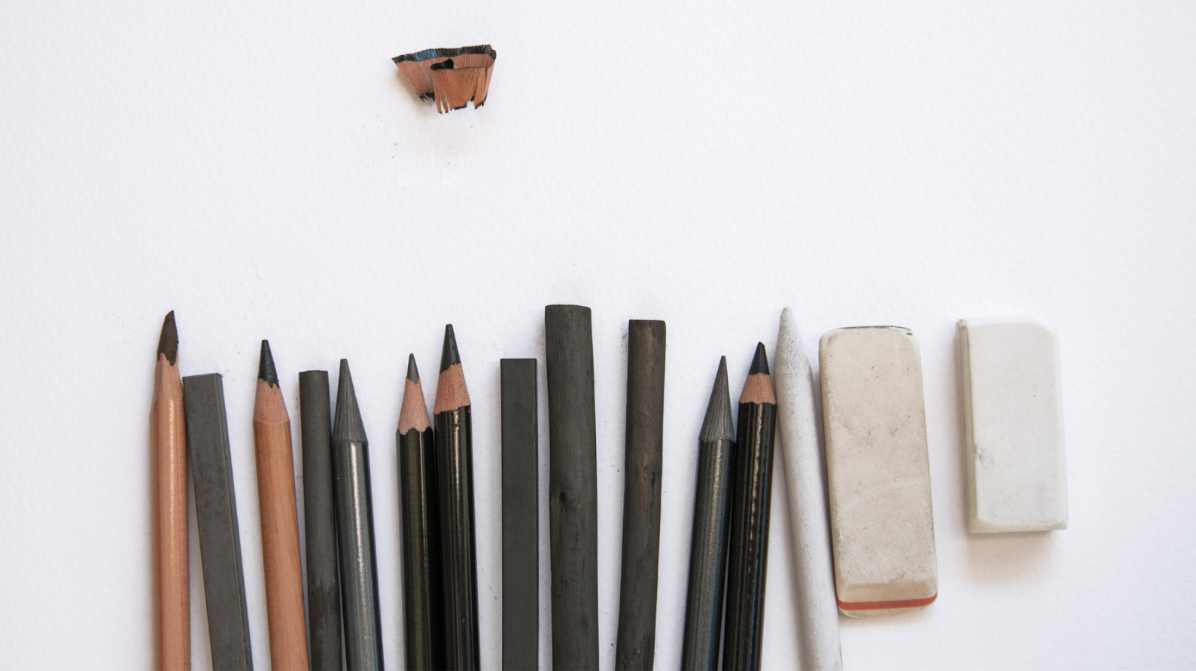
Charcoal comes in several forms – vine, willow, compressed, and pencil – each suited to different tasks and stages of a drawing.

  • Charcoal is one of the best media for beginners because it is erasable, expressive, and builds fundamental drawing skills fast.
  • The three main charcoal types are vine/willow (soft, ideal for sketching), compressed (rich blacks, harder to erase), and charcoal pencils (precision and detail)
  • The 7 core techniques are hatching, cross-hatching, scumbling, blending, stippling, lifting, and directional stroking.
  • Always work from large shapes to small details – never start with detail
  • Charcoal drawing for beginners should start with simple objects: spheres, cylinders, and still life
  • Preserve your highlights from the start – removing charcoal later always leaves grey marks
  • Fix your work immediately after finishing to prevent smudging
  • The beginner sphere project in this guide is the best single exercise for learning charcoal shading techniques for beginners

1. Charcoal Types and Characteristics

Before practising any charcoal drawing step by step, you need to understand your materials. Each type of charcoal behaves differently and suits different stages of work.

Charcoal Types at a Glance

Charcoal Type Hardness Erasability Best For Permanence
Vine Charcoal Very Soft Excellent Initial sketches, loose studies Low
Willow Charcoal Soft Excellent Large-scale sketches, underpainting Low
Compressed Charcoal Varies (2H–6B) Moderate Rich darks, finished details High
Charcoal Pencils Varies (H–6B) Good Precision and fine detail High
Charcoal Blocks Soft to medium Moderate Covering large areas quickly Medium


Vine and Willow Charcoal: The Foundation Media

Both are made from natural wood – grape vine or willow branches. They are the first charcoal most beginners should use.

Key properties:

  • Soft, delicate marks that blend easily
  • Highly erasable – perfect for correcting charcoal drawing step by step without damaging the paper
  • Ideal for gesture drawing, composition planning, and initial layouts
  • Creates soft atmospheric effects

Best used for:

  • Preliminary sketches before applying compressed charcoal
  • Gesture drawing and figure studies
  • Teaching yourself basic charcoal sketching techniques
  • Pushing through creative blocks during practice sessions

Winsor & Newton vine charcoal is a reliable option for beginners and professionals.


Compressed Charcoal: The Powerhouse

Ground charcoal bound with gum or wax. Far more intense and permanent than vine charcoal.

Key properties:

  • Delivers deep, velvety blacks
  • Available in hardness grades from 2H to 6B
  • Harder to erase – commit your marks
  • Excellent for building dramatic contrast and shadows

Best used for:

  • Portrait shadows and deep tonal areas
  • Still life with strong directional lighting
  • Final layers, once your composition is locked in


Charcoal Pencils: Precision Tools

Compressed charcoal encased in wood. The tool of choice for fine detail work.

Key properties:

  • Maximum control with minimal mess
  • Available in H, HB, 2B, 4B, and 6B grades
  • Perfect for rendering eyes, lips, hair strands, and fine texture
  • Can be sharpened to a precise point

2. Charcoal Drawing Tools and Materials

Having the right charcoal drawing tools makes a direct difference to your results. Here is what every artist – beginner or experienced – should have to hand.

Primary Charcoal

  • Vine or willow charcoal (3 sticks in varied thicknesses)
  • Compressed charcoal (range of grades: 2H, HB, 2B, 4B, 6B)
  • Charcoal pencils for detail work

Erasers and Correction Tools

  • Kneaded eraser – the most important tool after the charcoal itself. Lifts marks gently without damaging paper. Mould it to a point for precision.
  • Vinyl or plastic eraser – removes stubborn marks and creates sharp, clean edges.
  • Eraser pencil – for fine, detailed corrections
  • Electric eraser – for fast, controlled removal over larger areas

Blending Tools

  • Blending stumps (tortillons) – rolled paper tools in various sizes for smooth gradations.
  • Soft cloth or tissues – for broad atmospheric blending
  • Chamois cloth – ideal for very soft transitions
  • Cotton swabs – for delicate adjustments in small areas
  • Fingers – fast and organic, though use sparingly to avoid transferring oils

Paper

The texture (called “tooth”) of the paper determines how charcoal grips the surface and builds in layers.

Paper Type Best For
Textured charcoal paper (Strathmore, Canson) Most charcoal work – strong grip for layering
Cold-press watercolour paper Expressive, bold mark-making
Smooth vellum Bristol Precise, detailed rendering
Toned paper (grey, cream) Portraits and figure work – sets the mid-tone automatically

Jackson’s Art Supplies has an excellent guide to paper selection worth reading before you buy.

Fixatives

  • Workable fixative – protects layers while allowing you to continue working
  • Final fixative – seals the completed piece permanently. Always use in a ventilated area.

Starter Kits by Level

Beginner kit: Vine charcoal (3 sticks), 3 charcoal pencils (2B, 4B, 6B), kneaded eraser, 3 blending stumps, charcoal pad, workable fixative

Intermediate kit: Full compressed and pencil range (2H–6B), multiple erasers, varied paper textures, and both fixatives

Professional kit: Premium willow and compressed charcoal, electric eraser, advanced blending tools, archival papers, professional-grade fixatives, flat storage portfolio

3. Fundamental Charcoal Drawing Techniques

These are the foundational charcoal shading techniques for beginners that underpin all other work. Master these before anything else.

Value Control: The Most Important Skill

Value means the lightness or darkness of a tone. Controlling value is how you create the illusion of three dimensions on a flat page.

Beginner drill – the 10-step value scale:

  1. Draw 10 connected rectangles across your paper
  2. Leave the first rectangle as bare white paper
  3. Add a thin layer of charcoal to the second
  4. Gradually increase the amount of charcoal in each subsequent box
  5. Make the final box as black as you can get it
  6. Blend each box smoothly, with no visible lines between steps
  7. Repeat this exercise until your transitions are even and controlled

This is one of the most valuable beginner charcoal drawing exercises you can practise. Do it before every session when starting.
Mark-Making: Linear and Tonal Approaches

Linear marks:

  • Hatching – closely spaced parallel lines in one direction to create tone
  • Cross-hatching – two or more layers of hatching at different angles for deeper values
  • Contour lines – lines that follow the curves of a form to suggest volume
  • Gestural marks – quick, expressive strokes capturing movement or emotion

Tonal marks:

  • Side application – using the side of a charcoal stick to cover large areas quickly
  • Blending – smoothing charcoal with a stump, cloth, or finger for gradients
  • Scumbling – loose, irregular circular marks for rough, broken texture
  • Lifting – removing charcoal with an eraser to create highlights and correct areas

Core Shadow vs. Cast Shadow

This distinction is essential for any charcoal drawing step-by-step approach to three-dimensional subjects:

  • Core shadow – the darkest area on the object itself, on the side away from the light
  • Cast shadow – the shadow the object throws onto the surface beneath or behind it

Keeping these two visually distinct is what makes objects look solid and grounded.

4. The 7 Main Drawing Techniques Explained

These seven techniques form the technical foundation of all charcoal work. Each serves a specific purpose and can be combined for rich, varied results.

Technique 1: Hatching

Creating value through closely spaced parallel lines drawn in one direction.

How to do it:

  • Hold the charcoal at a 45-degree angle
  • Draw closely spaced parallel lines with consistent spacing
  • Vary the spacing to control how light or dark the area reads

Where to use it: Shadow sides of faces, clothing folds, background tones
Technique 2: Cross-Hatching

Layering multiple sets of hatched lines at different angles to build darker values.

How to do it:

  • Apply a first layer of hatching in one direction
  • Add a second layer at 45–90 degrees over the first layer
  • Add more layers for progressively deeper values

Where to use it: Fabric textures in still life, deep shadow areas, hair

Technique 3: Scumbling

Loose, irregular circular or random marks that create an organic, broken texture.

How to do it:

  • Use the side of a charcoal stick
  • Apply in small, random circular motions with varied pressure

Where to use it: Cloud formations, weathered stone, rough bark, atmospheric backgrounds

Technique 4: Blending / Smoothing

Merging charcoal particles to create gradual, seamless tonal transitions.

How to do it:

  • Apply charcoal evenly to the area
  • Use a blending stump, tissue, or finger
  • Work in circular or directional motions, building gradually

Where to use it: Skin in portrait work, smooth metal or glass surfaces, soft shadow edges

Technique 5: Stippling

Creating value through small dots or marks, with density controlling darkness.

How to do it:

  • Hold a charcoal pencil vertically
  • Make small, controlled dots
  • Place dots closer together for darker areas, further apart for lighter areas

Where to use it: Fine textures, distant foliage, gravel, sandy surfaces

Technique 6: Lifting (Subtractive Technique)

Removing charcoal to create lighter values – drawing with your eraser.

How to do it:

  • Cover an area evenly with charcoal first
  • Use a kneaded eraser for soft, gentle lifting
  • Use a hard eraser or eraser pencil for sharp, bright highlights

Where to use it: Highlights on noses, cheekbones, foreheads – anywhere light hits most directly. This is one of the most powerful charcoal shading techniques for beginners to learn early.

Technique 7: Directional Stroking

Applying charcoal with strokes that follow the contours and form of the subject.

How to do it:

  • Observe the direction of your subject’s surface
  • Apply strokes that follow the form’s natural curves
  • Use longer strokes for smooth surfaces, shorter ones for textured areas

Where to use it: Hair in portraits (each stroke following the growth direction), cylindrical forms like vases or arms

5. Beginner Project: Draw a Charcoal Sphere Step by Step

The sphere is the single best beginner charcoal drawing exercise because it teaches every fundamental skill at once: form, shading, cast shadow, reflected light, and highlight preservation. Complete this project before moving to any other subject.

What you need:

  • One stick of vine charcoal
  • One piece of compressed charcoal or a 4B charcoal pencil
  • A kneaded eraser
  • One blending stump
  • A sheet of charcoal paper (medium texture)
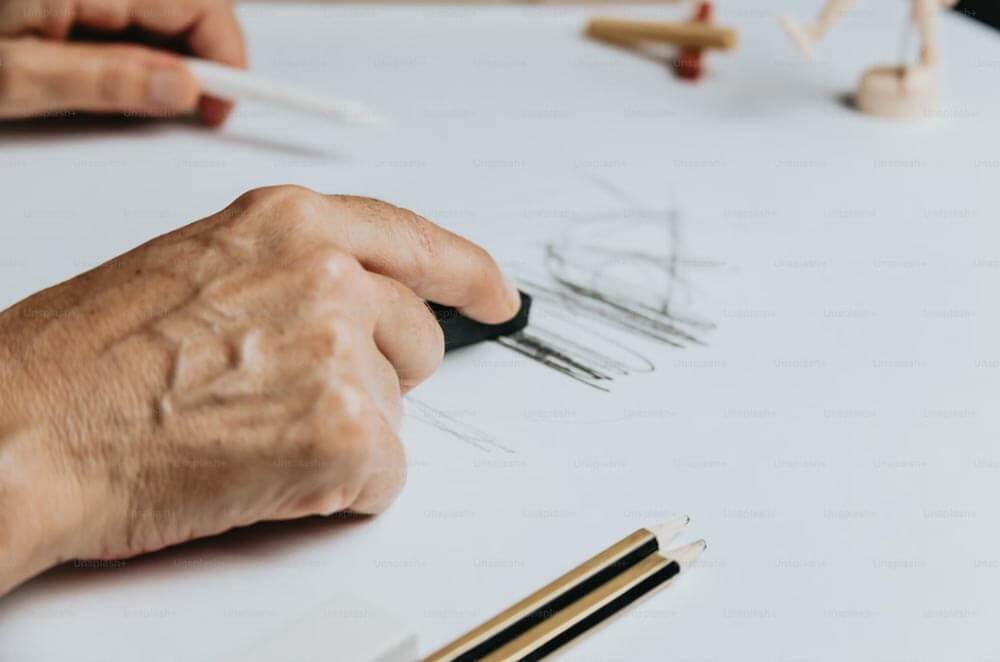
Step 1: Draw the Circle

Lightly sketch a circle using vine charcoal. Keep the marks very light – this is just a guide, not a finished line. If the circle is not perfect, that is fine. Charcoal is forgiving. Focus on making it roughly round.

Alt text suggestion: Lightly sketched circle outline using vine charcoal on textured paper – basic charcoal sketching techniques for beginners

Step 2: Identify the Light Source

Before applying any tone, decide where your light is coming from. Mark a small arrow outside the circle indicating the direction. Everything that follows depends on this decision.

Assume the light is coming from the upper left for this exercise.

Step 3: Block In the Shadow Zone

Using the side of your vine charcoal stick, lightly apply tone to the lower right portion of the sphere – the side away from your light source. Keep it soft and loose at this stage. Do not press hard. You are building from light to dark, not trying to get the final result yet.

Leave the upper left of the sphere completely untouched – that area will be your highlight.

Alt text suggestion: Blocking in the shadow area of a charcoal sphere – charcoal shading techniques for beginners

Step 4: Blend the First Layer

Using your blending stump, gently blend the charcoal you have applied. Work in a direction that follows the curve of the sphere – circular motions tend to work well here. The goal is a smooth gradient from dark on the shadow side to light on the illuminated side.

Do not blend into the highlight area.

Step 5: Add the Core Shadow and Reflected Light

The core shadow is the darkest band on the sphere – it sits just inside the edge of the shadowed side, not at the very edge. Using your compressed charcoal or 4B pencil, add a slightly darker band here.

Leave a thin strip of slightly lighter tone along the bottom edge of the sphere – this is reflected light bouncing up from the surface below. It is a subtle but important detail that makes the sphere look round rather than flat.

Alt text suggestion: Core shadow and reflected light on charcoal sphere – how to draw with charcoal step by step.

Step 6: Draw the Cast Shadow

The sphere sits on a surface. Where it meets that surface, there is a cast shadow. Draw this with compressed charcoal, making it darkest where it is closest to the sphere and gradually fading as it moves away. The shape should fan out slightly from the base of the sphere.

Step 7: Lift the Highlight and Refine

Using your kneaded eraser, gently dab or pull across the lightest area of the sphere (upper left) to lift the charcoal and reveal clean, bright paper. Use a light touch and work gradually – you want a soft, circular bright spot, not a harsh white patch.

Step back. Look at the sphere. Does it read as a three-dimensional round object? If not, push the darkest areas slightly darker with compressed charcoal and lift the highlight a little more. The contrast between your darkest dark and lightest light is what creates the sense of form.

Alt text suggestion: Completed charcoal sphere with highlight, core shadow, and cast shadow – easy charcoal drawing ideas for beginners, step by step

What you have just practised:

  • Basic charcoal sketching techniques (lightly establishing a form)
  • Charcoal shading techniques for beginners (gradual tone building)
  • The lifting technique (subtractive drawing)
  • Core shadow vs. cast shadow
  • Reflected light

Repeat this exercise until you can draw a convincing sphere confidently. Then try a cylinder, then a cube. These three forms underpin every subject in this guide.

6. How to Create a Charcoal Drawing: Full Process

Beginner Process (Step by Step)

Step 1: Outline and proportion. Sketch your subject lightly with vine charcoal. Focus on proportions first – not detail. Everything can be corrected at this stage.

Step 2: Identify light and shadow. Mark where your light source is. Identify the main highlight areas and shadow zones before applying any tone.

Step 3: Block in shadows. Using the side of your charcoal stick, loosely fill in the main shadow areas with compressed charcoal. Add mid-tones gradually. Leave highlights untouched.

Step 4: Blend and refine. Blend with a stump or soft cloth. Reinforce contrast where needed. Lift highlights with a kneaded eraser. Add final details with a charcoal pencil.

Practice subjects for beginners:

  • Value scales (the most important beginner charcoal drawing exercise)
  • Spheres, cubes, cylinders
  • Simple still life: fruit, a cup, a single folded cloth

Intermediate Process: Building Realism

  • Create thumbnail sketches to plan value and composition before starting
  • Build smooth transitions between light and dark using layered application
  • Use compressed charcoal for deep shadows, charcoal pencils for precision
  • Keep highlights clean throughout – do not let charcoal drift into them

Advanced Process: Charcoal Portrait Drawing

Step 1: Planning Choose a well-lit reference. Sketch proportions and feature placement lightly with vine charcoal.

Step 2: Structure Block in shadows first, then mid-tones. Check symmetry and proportion constantly.

Step 3: Feature detail

  • Eyes: Define contrast sharply and add catchlights with an eraser
  • Nose: Built form with soft gradations, not outlines
  • Lips: Model with tone, not line
  • Hair: Treat as a mass first, then refine individual strands with directional strokes

Step 4: Background. Develop a background that enhances the contrast around the face. Use soft, blended edges for realism.

Step 5: Finishing Final highlight lifting, contrast deepening, and edge cleanup. Fix with workable fixative when complete.

7. Creating Different Textures in Charcoal

Skin Textures

Smooth skin (portrait work):

  • Apply charcoal smoothly with a blending stump
  • Build up in thin layers, very gradually
  • Use a kneaded eraser for subtle, soft highlights
  • Avoid over-blending – it creates flatness

Aged skin:

  • Establish a base tone with smooth blending
  • Add wrinkles with a sharp charcoal pencil
  • Blend selectively, leaving some lines crisp
  • Use directional shading following the natural planes of the face

For deeper portrait techniques, the Portrait Society of America has useful reference material.

Hair

Dark hair:

  • Map the overall hair shape and major sections first
  • Apply base tone, leaving highlight areas
  • Add individual strands following the growth direction with a pencil
  • Vary stroke weight and pressure for realism

Light hair:

  • Work on toned paper for better value control
  • Use predominantly lifting (subtractive) techniques
  • Add darker strands selectively to show form

Natural Elements

  • Tree foliage – stippling motion for dense leaf clusters, varying pressure for light and shadow
  • Water – horizontal blending for calm surfaces, broken reflections for movement
  • Rock and stone – directional shading for form, varied pressure for surface texture

Architectural Elements

  • Brick – establish wall tone, add brick pattern with an eraser, vary individual brick tones.
  • Wood grain – base tone following the wood direction, grain lines added with a pencil

8. Subjects for Charcoal Drawing

Beginner-Friendly Subjects

Simple still life objects:

  • Spherical fruit (apples, oranges, pears)
  • Cylindrical objects (bottles, cans, cups)
  • Cubic forms (boxes, books)
  • Single flower in a vase
  • Simple folded cloth or drapery

These teach value, shading, and form with forgiving, stationary subjects. They are among the best easy charcoal drawing ideas for anyone starting out.
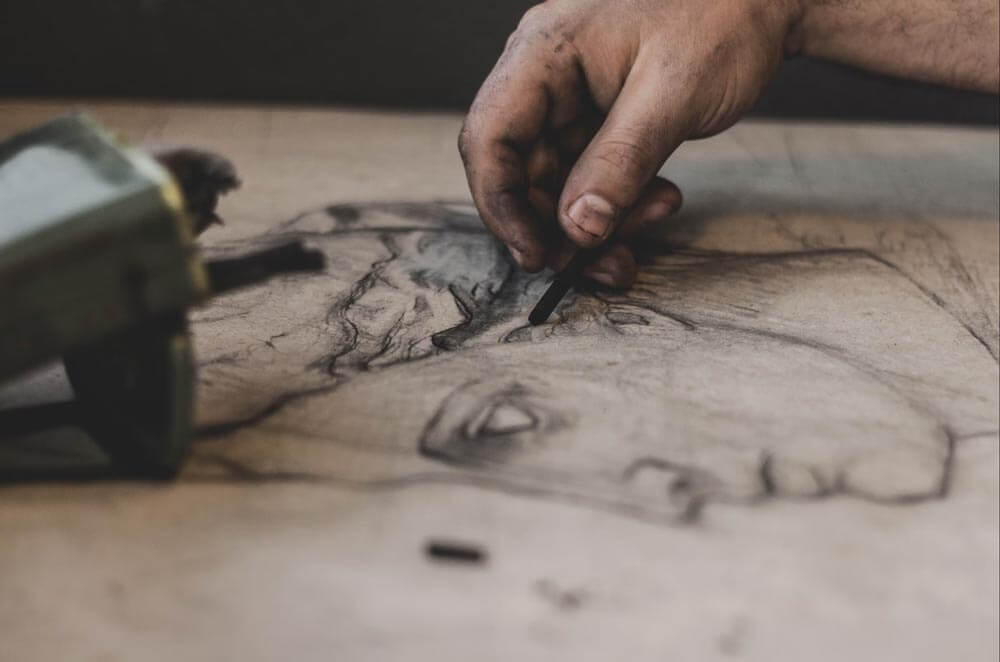
Natural objects:

  • Individual leaves, seashells, pebbles, feathers, pinecones

Intermediate Subjects

  • Landscape elements – trees, rocky formations, cloud studies, water reflections
  • Animal studies – pets, birds, horses (fur and feather texture suit charcoal perfectly)
  • Architectural subjects – historic buildings, doorways, bridges, interior spaces

Advanced Subjects

Charcoal portrait work: Self-portraits, character studies of elderly faces, child portraits, and multi-figure compositions are the ultimate test of observation and technique. Charcoal is the medium of choice for portrait drawing precisely because of how well it renders skin tones and subtle tonal transitions.

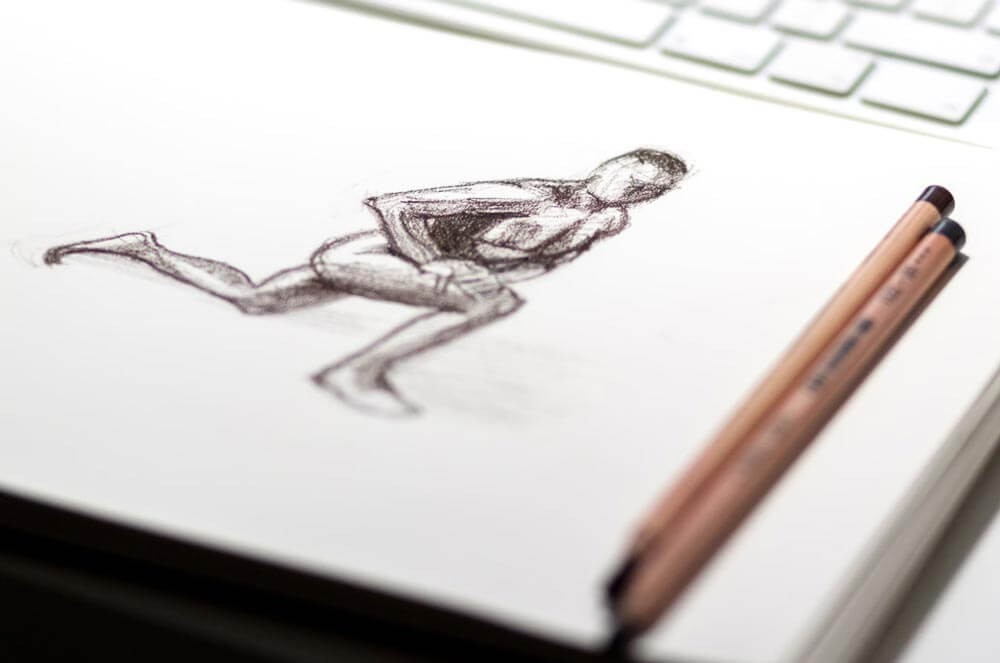
Figure drawing: Gesture drawings, full-figure studies, and partial figure studies (hands, feet, torso) all develop a foundational understanding of human anatomy. Charcoal’s coverage speed makes it ideal for timed gesture sessions.

Complex still life: Multiple objects with varied textures – reflective glass, transparent bottles, fabric with complex folds – test every technique simultaneously.

Subject Selection Tips

When choosing what to draw, consider:

  • Your current skill level – start simple and progress incrementally
  • Available time – simple objects for short sessions, portraits and landscapes for extended work
  • Lighting control – indoor subjects let you control the light completely
  • Personal interest – you will always produce better work on subjects that genuinely interest you

9. Modern Charcoal Drawing Techniques

Contemporary artists continue to push what charcoal can do. These approaches extend traditional methods into new territory.

Digital-Hybrid Workflow

Combining traditional charcoal with digital tools for planning, editing, and distribution:

  • Use Procreate or Photoshop to plan compositions and value patterns before touching paper
  • Print reference images with adjusted values for better translation to charcoal
  • Scan completed drawings for digital enhancement or portfolio use

Wet Charcoal Techniques

Applying water to charcoal creates paint-like, ink-wash effects:

  • Water wash – apply charcoal powder, then spread with a wet brush for atmospheric washes
  • Spray bottle method – mist dry charcoal lightly for organic, unpredictable textures
  • Direct wet application – dip willow charcoal in water for intense, permanent marks

Always use archival paper designed to handle moisture.

Mixed Media

  • Charcoal + white chalk on toned paper – expands the value range dramatically for portraits and figure studies.
  • Charcoal + graphite – charcoal for broad tones, graphite for precise detail and clean lines
  • Charcoal + ink – charcoal for value, ink for sharp accents and definition
  • Charcoal + acrylic gesso – textured surfaces and corrections not possible on bare paper

Photorealistic Charcoal Drawing

Achieving photograph-like precision requires:

  • A full charcoal pencil range (H through 6B)
  • Extremely gradual, layered value building
  • 40–100+ hours of work for complex subjects
  • A methodical approach, working from background to foreground

10. Top 5 Charcoal Drawing Tips

Tip 1: Master Your Grip and Pressure

Overhand grip – hold charcoal like a brush for broad, confident marks. Uses the arm rather than the wrist. Reduces cramping during long sessions.

Underhand grip – traditional pencil grip only for fine detail. Saves this position for charcoal pencil work.

Practice drill: Draw a single stroke that transitions from light to heavy pressure smoothly. Repeat until the transition is seamless. This is one of the most valuable charcoal drawing tips for beginners.

Tip 2: Establish Your Darkest Dark Within the First 20 Minutes

Find the deepest shadow in your subject. Apply compressed charcoal there at full intensity. Use this as your value anchor – every other tone in the drawing is judged against it. This single habit prevents weak, grey drawings more than any other technique.

Tip 3: Work in Layers, Not Details

  • Layer 1 – overall value patterns with vine charcoal
  • Layer 2 – refined forms with compressed charcoal
  • Layer 3 – surface textures with charcoal pencils
  • Final layer – highlights and final accents

Never complete one area before the rest of the drawing exists. Build everything together.

Tip 4: Use Paper Texture Strategically

  • Heavy texture – expressive, gestural work
  • Medium texture – most general charcoal drawing applications
  • Light texture – detailed, precise rendering

Work with the paper’s surface rather than against it. Artists & Illustrators has guidance on paper selection and texture worth reading.

Tip 5: Plan Your Highlights Before You Begin

Identify and highlight areas before applying any charcoal. Work carefully around them. It is far easier to preserve white paper than to recover it later.

Highlight categories to track:

  • Primary highlights – the brightest spots showing direct light
  • Secondary highlights – reflected light areas
  • Accent highlights – small bright spots that add life and sparkle

11. Advanced Charcoal Drawing Methods

Subtractive Drawing: Drawing with Your Eraser

This technique involves covering the page first, then carving out the image by removing charcoal.

Process:

  1. Cover the entire paper with an even mid-tone layer of charcoal
  2. Use erasers to pull out lighter areas – forms emerge from the darkness
  3. Add darker accents where needed with compressed charcoal
  4. Refine by adding and removing until complete

This approach is excellent for dramatic portraits with strong lighting, atmospheric landscapes, and high-contrast still life.

Additive and Subtractive Combined: The Professional Workflow

Most experienced artists use both approaches together:

  1. Sketch the composition with vine charcoal
  2. Cover the drawing with a mid-tone layer
  3. Use erasers to pull out lights (subtractive)
  4. Refine shadows and mid-tones with compressed charcoal (additive)
  5. Finish details with charcoal pencils

This combination gives the widest control over the full value range.

Advanced Texture Creation

Fabric textures:

  • Silk – smooth blending with sharp highlight lines
  • Wool – scumbled application following weave direction
  • Denim – cross-hatching with consistent spacing

Hard surface textures:

  • Metal – sharp contrast between highlights and reflections
  • Glass – clean edges with precise highlight placement
  • Stone – irregular stippling with varied tonal application

12. Composition and Planning

The Four-Value System

Simplify complex subjects into four values before starting:

  • White/light grey – highlights and direct light
  • Medium grey – general form modelling
  • Dark grey – form shadows and deeper tones
  • Black – deepest accents and cast shadows

Strong value patterns are more important than drawing accuracy. Plan yours in small thumbnail sketches before committing to the full page.
Focal Point and Edge Variety

  • Sharp edges at your focal point – they draw the eye
  • Soft edges in background areas and less important elements
  • Lost edges where forms merge into shadow

Atmospheric Perspective

Use charcoal’s natural gradation to create depth:

  • Darker values push objects forward
  • Lighter values suggest distance
  • Softer edges imply atmospheric haze
  • Reduced detail signals background placement

13. Common Mistakes in Charcoal Drawing

Starting with Detail Before Form

The mistake: Beginning with individual features (an eye, a leaf) before establishing the whole composition.

The fix: Block in the entire drawing first with very light marks. Develop all areas at the same rate. Add detail only in the final stages.

Using Only Mid-Tones

The mistake: Being cautious with charcoal application, producing grey, flat drawings without true blacks or clean whites.

The fix: Establish your darkest dark within the first 20 minutes. Push shadows to velvety black. Preserve clean highlights. Squint at your drawing to check contrast.

Over-Blending Everything

The mistake: Blending every mark until the drawing looks overworked and characterless.

The fix: Blend only where smoothness is genuinely required. Leave visible strokes in less critical areas. Texture and mark variety are what make charcoal drawings interesting.

Neglecting to Preserve Highlights

The mistake: Applying charcoal everywhere and trying to erase highlights back later.

The fix: Identify all highlighted areas before you start. Work around them carefully. Erasing back to true white is rarely fully successful.

Rushing the Initial Layout

The mistake: Spending only a few minutes on proportions before diving into shading.

The fix: Spend 20–30% of total drawing time on accurate layout. Check proportions constantly. Do not begin shading until the structure is solid.

Inconsistent Light Source

The mistake: Placing shadows without reference to a consistent light direction.

The fix: Decide on your light source before you begin. Mark it with a small arrow on the edge of your paper. Check every shadow against it throughout the drawing.

14. Troubleshooting Common Issues

Overworked, Muddy Drawings

Symptoms: Loss of clean whites, smeared appearance, lack of contrast.

Solutions:

  • Start fresh with clean materials
  • Protect highlights more carefully from the start
  • Limit blending to essential areas only
  • Use sharper tools for final details

Weak, Grey Drawings

Symptoms: Insufficient contrast, timid marks, no bold darks.

Solutions:

  • Establish the darkest dark immediately
  • Use compressed charcoal more boldly
  • Simplify the value structure – fewer mid-tones, clearer contrast

Surface Damage from Over-Erasing

Symptoms: Roughened paper, inability to apply clean charcoal over damaged areas.

Prevention:

  • Plan highlights before applying any charcoal
  • Use a kneaded eraser with gentle pressure
  • Accept some marks rather than over-correcting

15. Advantages and Disadvantages of Charcoal Drawing

Advantages

Exceptional tonal range: Charcoal offers the widest value range of any drawing medium – from the deepest black to the subtlest light grey. This makes it ideal for dramatic lighting effects and emotionally powerful portrait work.

Forgiving and correctable Vine and willow charcoal can be erased, blended, and reworked almost indefinitely. This makes it the ideal medium for charcoal drawing for beginners to learn the fundamentals without anxiety.

Speed: Large areas can be covered quickly. Charcoal is the first choice for gesture drawing sessions and timed studies.

Versatility works equally well for portrait, landscape, still life, figure drawing, and abstract work. Few media match this range.

Educational value: Working in charcoal develops value sensitivity, compositional awareness, and observational skills that transfer directly to oil painting, graphite, and other media.

Disadvantages

Dust and mess: Charcoal produces significant dust. Work in well-ventilated spaces. Wear a dust mask during extended sessions. Keep electronics away from your drawing area.

Smudging vulnerability: Charcoal remains vulnerable to smudging until fixed. Apply workable fixative to completed sections as you work, and use a final fixative when finished.

Colour limitation: Charcoal works only in greyscale. This limits certain subject matter and commercial applications.

Paper requirements: Textured, higher-quality paper is necessary for charcoal to adhere properly. This adds to material costs compared to some other drawing media.

16. Key Takeaways

  • Start every session with a 10-step value scale – it is the single best practice drill for charcoal at any level.
  • Master the 7 techniques: hatching, cross-hatching, scumbling, blending, stippling, lifting, and directional stroking.
  • The sphere project is the most valuable beginner charcoal drawing exercise – return to it regularly.
  • Always work from large shapes to small details
  • Establish your darkest dark within the first 20 minutes of every drawing
  • Preserve highlights from the start – recovering them later is always imperfect
  • Choose vine or willow charcoal for sketching and corrections; compressed charcoal for rich, permanent darks
  • Develop your skills with simple objects before moving to portrait or figure work
  • Fix your work promptly after each session to prevent smudging
  • For easy charcoal drawing ideas, start with fruit, bottles, and simple drapery – then progress to faces and full figures

17. Learning Resources for Continued Growth

Online Drawing Platforms

On Cosimo

About the Author

John Sewell

John Sewell is the founder of Cosimo and holds a Master’s Degree in History of Art from the University of Birmingham. He built Cosimo to give emerging artists fair, transparent ways to reach collectors directly. He was also shortlisted for the Great British Entrepreneur Awards. His background in art, creative entrepreneurship and digital marketplaces informs his writing on artist development, accessible art, and the future of online art sales.

FAQs

Spray your completed drawing with a workable fixative first. Place glassine sheets between works when storing them. Keep drawings flat in a portfolio or archival box. For long-term display, frame with UV-protective glass and acid-free backing. Store in a cool, dry environment.

Use a workable fixative (such as Krylon Workable Fixatif) while you are still working, as it lets you continue drawing over fixed layers. Use a final fixative (such as Lascaux or Grumbacher) to seal the finished piece. Spray in thin, even layers from 30–35 cm (12–15 inches) away, always in a well-ventilated space.

  • Rough / cold-press paper – best for bold, expressive charcoal shading techniques and gestural work
  • Smooth / hot-press paper – ideal for fine detail and precise blending
  • Toned paper – provides a built-in mid-tone, useful for portraits and figure work
  • Newsprint – fine for beginner charcoal drawing exercises and practice, but not archival

Yes. Charcoal combines well with:

  • Graphite – charcoal for broad tones, graphite for fine line and precise detail
  • Ink – adds bold contrast and definition to charcoal underlayers
  • White chalk or pastel – extends the tonal range on toned paper
  • Watercolour or acrylic – use charcoal for underdrawing or final detail over dry paint

Always test combinations on scrap paper first.

  • Blending stumps/tortillons – precise control for gradients and smooth transitions
  • Soft cloth or tissue – broad atmospheric blending over large areas
  • Fingers – organic texture, but use sparingly to avoid transferring skin oils
  • Kneaded eraser – lifts charcoal to create or refine highlights
  • Brushes – soft, painterly blending effects

Always blend in the direction of your subject’s form for the most convincing results.

The Artist’s Guide to Social Media: Growing Your Community

Artist's Guide to Social Media

Table of Contents

  1. How Do Artists Use Social Media?
  2. Why Social Media Matters for Artists in 2026
  3. Best Social Media for Artists in 2026: Comparison
  4. How to Use Social Media as an Artist
  5. How to Stand Out as an Artist on Social Media
  6. Social Media Management for Artists
  7. Best Practices and Strategies
  8. Monetising Your Social Media Strategy
  9. Protecting Your Artistic Intellectual Property
  10. Mental Health and Social Media
  11. Conclusion
  12. FAQs

How Do Artists Use Social Media?

Social media isn’t a single tool – it’s a collection of behaviours that, used intentionally, can transform how an artist builds their career. Artists in 2026 use social platforms in several distinct and overlapping ways.

Showcasing Finished Work

Sharing completed pieces directly with potential collectors and admirers. A well-photographed artwork posted at the right time can reach thousands of people who would never visit a physical gallery.

Documenting the Creative Process

Time-lapses, work-in-progress shots, and process videos are among the highest-performing content types for artists. Audiences connect deeply with seeing how a piece comes to life.

Networking with Other Artists and Galleries

Direct messages, collaborative projects, and community hashtags allow artists to build professional relationships that previously required gallery connections or physical attendance at events.

Selling Work and Taking Commissions

Instagram Shops, direct DM sales, and links to online stores make social platforms active sales channels – not just awareness tools.

Teaching and Sharing Knowledge

Tutorials, technique breakdowns, and art history content build authority and attract a broader audience – including those who may later commission or purchase work.

Building a Collector Community

Regular, authentic engagement with followers transforms passive viewers into active supporters – people who share your work, attend your exhibitions, and return to buy again.

Key Insight

The artists who grow fastest are rarely those who post the most. They are the ones who use social media with the clearest sense of purpose – knowing exactly what they want each platform to do for their career.

The Digital Renaissance: Why Social Media Matters for Artists in 2026

Social media has fundamentally changed how art is discovered, discussed, and sold. Over the last decade, it has become the dominant space for creative discovery and community in the art world – and in 2026, that shift is accelerating.

  • $9.72B

Global online art market value in 2023

  • $21.12B

Projected market value by 2032

  • 1B+

Monthly active users on Instagram are engaging with creative content.

  • 90%

Of artists under 35, consider social media essential for professional growth (Social Media Examiner)

These numbers reflect a fundamental truth: online visibility and digital engagement are now directly linked to artistic reach, sales, and long-term career sustainability. An artist without a social presence in 2026 is the equivalent of a business with no website in 2010.

Best Social Media for Artists in 2026: Platform Comparison

Not every platform will serve every artist equally. The best choice depends on your medium, your audience, and how you want to spend your time. Here’s a clear breakdown of the top platforms for artists in 2026 – and what each one is genuinely best for.

Instagram

Best Overall Visual Platform

  • Largest audience for visual art discovery
  • Strong commerce tools – Shopping, link in bio, DM sales
  • Reels algorithm rewards new-creator reach
  • Rich analytics for audience insights
  • The collector community is deeply active here

TikTok

Best for Process & Discovery

  • Exceptional organic reach for new artists
  • Process videos and time-lapses perform extremely well
  • Younger, highly engaged audience
  • Duet and collab features for community building
  • Less suited to direct sales; stronger for awareness

Pinterest

Best for Long-Term SEO Traffic

  • Content stays discoverable for months or years
  • Strong referral traffic to websites and online shops
  • Ideal for print artists and home decor-adjacent work
  • Visual search algorithm rewards quality imagery
  • Less real-time engagement; more passive discovery

LinkedIn

Best for Commercial & B2B Art

  • Strong for concept artists, illustrators, and designers
  • Access to art directors, agencies, and publishers
  • Growing creative community since 2023
  • Thought leadership content performs well
  • Less suited to fine art or collector sales

Facebook

Best for Community Groups

  • Art groups and buy/sell communities remain active
  • Facebook Marketplace is useful for local art sales
  • Older collector demographic concentrated here
  • Organic reach has declined significantly
  • Pairs well with paid ads for targeted promotion

Behance / ArtStation

Best Portfolio Platforms

  • Designed specifically for creative portfolios
  • Used by recruiters, studios, and agencies
  • ArtStation is preferred in the gaming and concept art industries
  • Behance connects to Adobe Creative Cloud
  • Less suited to direct follower engagement

Head-to-Head Comparison: Which Platform Should You Prioritise?

Platform Audience Size Best Content Type Sales Potential Best For
Instagram 1B+ monthly Images, Reels, Stories High All visual artists
TikTok 1B+ monthly Short video, process Medium Building awareness fast
Pinterest 465M monthly Static images, boards Medium (referral) Print, home décor artists
LinkedIn 950M users Articles, portfolios Medium (B2B) Commercial / illustration
Facebook 3B+ monthly Groups, Marketplace Low–Medium Community building
Behance / ArtStation Niche professional Portfolio projects Low (freelance leads) Game/concept art pros

2026 Recommendation: Most artists benefit from a primary platform (Instagram or TikTok for discovery) paired with a long-term traffic engine (Pinterest) and a portfolio home (Behance, ArtStation, or a personal website). Spreading thinly across all platforms is less effective than going deep on two or three.

How to Use Social Media as an Artist

Starting Point

Using social media as an artist is different from using it as a business or influencer. Your goal is not just to get followers – it’s to build a community of people who genuinely care about your work. That requires a distinct approach: one grounded in authenticity, consistency, and a clear sense of what you want each platform to do for your career.

The most effective approach for artists in 2026 combines three things: showing up consistently, sharing more than just the finished product, and engaging like a real person rather than a brand. Here’s how to get started and what to focus on at each stage.

Step 1 – Define Your Goals Before You Post

  • Are you trying to attract collectors, build a commission queue, or grow a following for future courses or products?
  • Each goal points to a different content strategy. Collector-focused accounts prioritise finished work and studio context; commission-focused accounts highlight process and availability.
  • Clarity on your goal prevents the most common mistake: posting randomly and hoping something sticks.

Step 2 – Choose One or Two Primary Platforms

  • Start with the platform where your target audience already spends time – for most visual artists, this is Instagram.
  • Add a second platform that serves a different purpose: TikTok for reach, Pinterest for long-term traffic, or LinkedIn for commercial leads.
  • Avoid spreading across five platforms simultaneously when you’re still building momentum.

Step 3 – Develop a Repeatable Content Mix

  • Showcase posts – finished artwork, high-quality photography, clean presentation
  • Process content – time-lapses, work-in-progress shots, “how I made this” breakdowns
  • Personal content – your studio, your story, your inspiration sources
  • Educational content – techniques, tools, and art history that relate to your practice
  • Community content – responses, questions, polls, collaborations

Step 4 – Engage Before You Expect Engagement

Spend 10–15 minutes before and after each post engaging with accounts in your niche. Comment meaningfully on other artists’ work. Reply to every comment on your own posts in the first hour. This signals to platform algorithms that your content is worth distributing – and it genuinely builds relationships that matter to your career.

Practical Tip

Treat your first 100 followers like they are your most important collectors. Personal, thoughtful responses at this stage build a foundation of loyalty that scales – people remember how you made them feel when you were small.

How Can You Stand Out as an Artist on Social Media?

Standing out in a crowded digital space requires creativity, consistency, and authenticity. Here are the most effective approaches for building a presence that attracts real attention.

Diversify Your Content

  • Document your process – share step-by-step progress shots from initial sketch to final piece.
  • Studio tours – a short video of your creative space makes your audience feel genuinely connected.
  • Tutorials and technique tips – demonstrate specific skills like colour blending or your texturing method
  • Personal stories – share what drives your work and the meaning behind individual pieces
  • Collaborative projects – partner with other artists to reach new audiences
  • Interactive content – polls, Q&As, and quizzes on Instagram Stories directly involve your followers

Consistency is Key

  • Instagram – aim for 3–4 posts per week
  • TikTok – 1–2 videos daily maintains visibility with the algorithm
  • Pinterest – 5–10 pins weekly keeps content fresh and discoverable
  • Maintain a cohesive visual identity: consistent colour palette, fonts, and editing style across all channels
  • Dedicate a set time each day to reply to comments and engage with your community

Optimise Your Profiles

  • Write a bio that clearly communicates who you are, what you make, and what you want visitors to do next.
  • Use a high-resolution profile image that reflects your artistic identity
  • Link to your portfolio, shop, or commission page – and make sure that destination is always current

Analyse and Adapt

  • Review platform analytics monthly – look for patterns in engagement, reach, and audience demographics.
  • Test different content formats and posting times; use what the data tells you, not just what feels right.
  • Follow artists whose growth you admire and observe what they do consistently – then adapt it to your own voice.

Social Media Management for Artists

Creating great art and managing a social media presence are two very different skills. The artists who sustain long-term growth are usually those who treat social media management as a distinct discipline – something that gets planned, batched, and reviewed, not just done impulsively between creative sessions.

Building a Content Calendar

A content calendar removes the daily pressure of deciding what to post. Set aside time once a week – or once a month if you batch content – to plan your posts.

  • Plan around your own creative output: what work will you finish this week that can be shared?
  • Rotate content types so your feed doesn’t become monotonous – mix finished work with process, personal, and educational content.
  • Note upcoming events, art fairs, and seasonal hooks that your audience might connect with
  • Schedule posts using a tool like Buffer, Later, or Meta Business Suite so publishing doesn’t interrupt your creative flow

Recommended Social Media Management Tools for Artists

Later

Visual content calendar purpose-built for Instagram. Drag-and-drop scheduling and a preview of how your feed will look before you post.

Buffer

Multi-platform scheduling tool. Good for artists managing Instagram, Pinterest, and LinkedIn simultaneously without logging into each app separately.

Meta Business Suite

Free tool from Meta for managing Instagram and Facebook together. Includes scheduling, analytics, and inbox management.

Canva

Design templates for social posts, Stories, and banners. Keeps your visual identity consistent without needing graphic design experience.

Tailwind

Pinterest-specialist scheduling tool with SmartSchedule technology that posts at peak engagement times automatically.

Iconosquare

Analytics and scheduling platform with detailed competitor analysis – useful once you’re ready to benchmark your growth against similar artists.

Time Management: How Much Time Should Artists Spend on Social Media?

This is one of the most common questions artists ask – and the honest answer is: less than most people think, if you’re organised.

  • Content creation – 1–2 hours per week if you batch-shoot and plan ahead
  • Scheduling and captioning – 30–60 minutes per week using a scheduling tool
  • Daily engagement – 10–15 minutes to reply to comments and interact with others
  • Monthly review – 30 minutes to review analytics and adjust your strategy

Total: roughly 3–4 hours per week is enough for a consistent, professional social media presence as an independent artist – provided you plan and use scheduling tools effectively.

Avoiding Burnout Through Smarter Management

  • Batch your content creation – shoot multiple pieces of content in a single session rather than scrambling daily.
  • Repurpose content across platforms: a TikTok process video can become an Instagram Reel; a Pinterest pin can link back to an existing Instagram post.
  • Set fixed “off” times – social media doesn’t need to be checked 24/7. Notifications can wait
  • Automate what you can so your creative energy goes into making art, not managing apps.

Social Media Tips for Visual Artists: Best Practices and Strategies

Create a Consistent Visual Identity

  • Use a specific colour scheme, recurring themes, or a unique editing style across all posts.
  • Plan your feed using tools like Canva or Adobe Express to see how posts will look together before publishing.
  • Consistency in visual identity builds brand recognition – your work should be recognisable even before a viewer sees your name.

Hashtag Strategy

  • Combine popular hashtags with niche ones for the best reach without getting lost in the noise
  • Useful examples: #ArtistOnInstagram, #DigitalArt, #ContemporaryArt, #PaintingOfTheDay, #SketchBook
  • Rotate hashtag sets regularly to avoid algorithmic suppression
  • Research hashtags used by artists in your specific niche – not just generic art tags

Engage Authentically

  • Reply to comments with personalised messages – not just emojis or generic responses.
  • Ask questions in your captions to invite conversation
  • Host live sessions, interview fellow artists, and encourage your community to share their own work
  • Participate in art challenges and community events that align with your practice

Technical Quality Matters

  • Photograph your work in good natural light or invest in a simple lighting setup.
  • Use editing tools like Lightroom, VSCO, or Snapseed to ensure colours are accurately represented.
  • Always post at the highest resolution the platform allows – grainy or poorly lit images undermine otherwise strong work.
  • Keep profile pictures, bios, and visual styles consistent across every platform you use

Monetising Your Social Media Strategy as an Artist

Social media is not just a place to share art – it’s an active sales channel. Here are the most effective ways artists are turning followers into income in 2026.

  • Commissioned artwork – offer custom pieces designed to each buyer’s preferences; promote availability clearly and regularly.
  • Digital products – printable art, digital wallpapers, brushes, and templates that sell repeatedly without additional effort
  • Online workshops and tutorials – paid sessions that leverage your existing expertise and audience trust
  • Patreon or membership models – offer exclusive content, early access, and behind-the-scenes posts to paying supporters.
  • NFTs and digital collectables – explore blockchain-based markets for verified digital ownership of your work
  • Brand partnerships and affiliate marketing – collaborate with art supply brands, framing companies, or creative platforms that align with your practice

Protecting Your Artistic Intellectual Property

Sharing work online always carries some risk of unauthorised use. These steps reduce that risk significantly.

  • Watermark your previews – use a subtle but present watermark on preview images while providing clean files to paying buyers.
  • Understand each platform’s content policies – know what rights you grant when you post and how to dispute misuse.
  • Register your copyright – formal registration strengthens your legal position if you ever need to pursue infringement.
  • Use clear licensing agreements – define exactly what buyers can and cannot do with your work at the point of sale.
  • Monitor for misuse – Google’s reverse image search and automated tools can identify where your images appear across the web.

Mental Health and Social Media

Any honest guide to social media for artists has to address the toll it can take. The same platforms that build careers can also breed anxiety, comparison, and creative burnout. Managing your relationship with social media is as important as managing your content strategy.

  • Maintain clear boundaries between your online presence and personal life
  • Avoid comparison traps – other artists’ highlight reels are not an accurate picture of their full experience
  • Set screen time limits and schedule regular digital detoxes to recharge creatively
  • Practice mindfulness and set realistic expectations for growth – most meaningful artistic audiences take years to build
  • Remember that follower count is a vanity metric – engagement, sales, and genuine connections matter more

Wellbeing Reminder

Your worth as an artist is not measured by your follower count, your engagement rate, or how quickly you’re growing. Social media is a tool – it works for you, not the other way around.

Conclusion: Your Continuous Social Media Journey

Social media in 2026 offers artists an extraordinary opportunity – a direct line to collectors, collaborators, and communities that didn’t exist a generation ago. The artists who make the most of it are not necessarily the most talented or the most prolific. They are the most intentional.

This guide has covered how artists use social media, which platforms work best for different creative practices, how to manage your time and tools efficiently, and how to protect both your work and your wellbeing in the process. The path forward is yours – consistent, authentic, and strategic.

Your 2026 Action Plan

Choose your two primary platforms. Define your content mix. Build a one-month content calendar. Schedule 15 minutes of daily engagement. Review your analytics monthly and adjust. Do this consistently for six months – the results will surprise you.

FAQs

Start by choosing one or two platforms where your target audience is already active – for most visual artists, Instagram is the obvious first choice. Then develop a repeatable content mix: finished artwork, process content, personal stories, and educational posts. Show up consistently, engage genuinely with your community, and treat social media as a long-term relationship-building tool rather than a quick sales channel.

The most important thing is clarity of purpose. Know what you want social media to do for your career – build awareness, attract commissions, reach collectors, or grow a community – and let that goal shape every decision about what and how you post.

For most visual artists, Instagram remains the strongest primary platform in 2026 – it has the largest engaged audience for visual art, strong commerce tools, and a well-established collector community. TikTok is the best platform for reaching new audiences quickly, particularly through process videos and time-lapses. Pinterest is the top choice for long-term, passive traffic and is especially powerful for artists whose work relates to home décor, print, or lifestyle.

The best strategy for most artists is to go deep on one primary platform rather than spreading thinly across many. Once you have a consistent presence established, add a second platform that serves a complementary purpose.

Artists use social media to showcase finished work, document their creative process, connect with collectors and galleries, take commissions, sell digital products, and teach their skills through tutorials. The most career-accelerating use is building a loyal community over time – people who follow your journey, share your work, and return to buy as your practice evolves. This rarely happens from posting alone; it comes from consistent, genuine engagement.

A realistic and sustainable amount for an independent artist is 3–4 hours per week. This breaks down as roughly 1–2 hours for content creation (batched), 30–60 minutes for scheduling and captions, and 10–15 minutes of daily engagement. Using scheduling tools like Later or Buffer significantly reduces the time required without reducing the impact of your presence.

Use visible watermarks on preview images, post at resolutions that are high enough to look good but low enough to be impractical for printing, and familiarise yourself with each platform’s copyright policies. For work you’re actively selling, formal copyright registration strengthens your legal position. Use Google’s reverse image search periodically to check whether your images are appearing anywhere they shouldn’t be.

Yes. Despite ongoing concerns about declining organic reach, Instagram remains the most important social platform for visual artists in 2026. Its audience is the largest and most commercially active for art collectors, interior designers, art directors, and galleries are all present and actively discovering new artists. The key is adapting to the current algorithm, which favours Reels and consistent posting, rather than relying on static image posts alone as the only format.

Process content consistently outperforms static showcase posts in terms of reach and engagement. Time-lapses of artwork being created, behind-the-scenes studio footage, and “how I made this” breakdowns tend to generate significantly more shares and comments than a finished-work image alone. That said, finished-work posts drive the most direct sales – so the strongest content strategy combines both, using process content to build an audience and showcase posts to convert that audience into buyers.

Who Was Cosimo de’ Medici?

Cosimo de Medici

Cosimo de’ Medici (1389-1464) was a Florentine banker, statesman, and art patron whose financial power and cultural vision transformed Florence into the birthplace of the Renaissance. He built one of Europe’s most powerful banking empires, championed democratic reforms, funded landmark architectural projects like Brunelleschi’s famous dome, and commissioned iconic works by Donatello. Awarded the title “Father of the Fatherland” after his death, his legacy endures in every corner of Florence – and continues to inspire artists and patrons around the world today.

Table of Contents

  1. Who Was Cosimo de’ Medici?
  2. Early Life and Family Origins
  3. Medici Family History
  4. The House of Medici: A Dynasty of Power and Influence
  5. How Did Cosimo de’ Medici Build His Wealth?
  6. How Cosimo de’ Medici Shaped Florentine Politics and Renaissance Democracy
  7. Cosimo de’ Medici’s Art Patronage: Fuelling the Renaissance in Florence
  8. Cosimo de’ Medici’s Influence on Renaissance Architecture and Urban Transformation
  9. Interesting Facts About Cosimo de’ Medici
  10. Cosimo de’ Medici’s Character: A Complex Figure of Power and Principle
  11. Cosimo de’ Medici’s Enduring Legacy in Modern Times
  12. Key Takeaways

Who Was Cosimo de’ Medici?

Cosimo de’ Medici (1389-1464) wasn’t just a wealthy Florentine banker – he was a visionary whose influence helped shape the very heartbeat of the Renaissance. Born into the powerful Medici family, he transformed himself from a strategic businessman into a patron whose support of artists, thinkers, and architects redefined Florence. He is often regarded as one of the defining patrons of the Renaissance, whose support helped transform Florence into a global centre of art and innovation.

What makes Cosimo’s story truly fascinating is how effortlessly he fused wealth with wisdom. His life shows how financial power, when guided by purpose and compassion, can ignite cultural movements that last for centuries. Admired by his peers for his generosity, resilience, and unwavering love for the arts, Cosimo Medici built more than a banking empire – he built a legacy that continues to inspire leaders, artists, and dreamers today.

That same spirit of supporting artists and making art accessible to all is what drives platforms like Cosimo.art, which takes its name and inspiration directly from the man who believed that patronage of the arts was among the highest uses of wealth.

Early Life and Family Origins

Cosimo de’ Medici was born on 10 April 1389, alongside his twin brother, Damiano. Their parents, Giovanni and Piccarda, named them after Saints Cosma and Damiano – figures celebrated for offering free medical services to those in need. Cosimo de’ Medici later redefined his “official” birthday to 27 September, the Holy Day honouring these saints. This shift was symbolic, reflecting his lifelong commitment to values that went beyond mere personal ambition.

Growing up in a family that valued commerce and service, Cosimo Medici was groomed from an early age to manage the family business and contribute to the welfare of his community. His formative years were marked by exposure to the practicalities of banking and the idealism that would later fuel his patronage of the arts. His father, Giovanni di Bicci de’ Medici, had already built considerable commercial respectability in Florence, and young Cosimo absorbed both his father’s financial discipline and his quiet civic-mindedness.

Medici Family History

The Medici family’s roots stretch back to the agricultural Mugello region north of Florence, where they are first mentioned in a document of 1230. The family name itself – Medici, the plural of medico – suggests an early association with medicine, though by the time they rose to prominence, they were firmly entrenched in trade and banking.

In the early 13th century, the Medici emigrated to Florence, where they gradually built influence through the wool trade and then banking. By the 14th century, family members were serving in Florence’s governing Signoria, but they were still far less notable than rival clans like the Albizzi or the Strozzi. It was the leadership of Giovanni di Bicci de’ Medici in the late 14th and early 15th centuries that laid the true financial foundation for what was to come.

Giovanni established the Medici Bank’s Florentine branch in the 1390s and shrewdly cultivated the church as a client, eventually securing the account of the papacy. When he passed the business to his sons Cosimo and Lorenzo in 1420, the family was already among Florence’s wealthiest and most influential. What Giovanni had built in stability, Cosimo de’ Medici would transform into cultural dominance.

The full sweep of the Medici family history – spanning banking dynasties, papal connections, cultural patronage, and European royal marriages – is documented across many scholarly sources, including records held at the John Rylands Library in Manchester. The family ruled Florence for nearly three centuries before the dynasty came to an end in 1737 with the death of the last Medici Grand Duke, Gian Gastone, without a male heir.

For scholars interested in primary documents, the Medici family archives at Archives Hub (held at the John Rylands Library, Manchester) offer a remarkable window into the family’s letters, ledgers, and correspondence from 1085 to 1770.

The House of Medici: A Dynasty of Power and Influence

The House of Medici stands as one of the most powerful and influential families in European history, with Cosimo de’ Medici serving as its most transformative patriarch. The Medici dynasty originated in the 13th century as a merchant family in Florence, but it was under Cosimo de’ Medici’s leadership that they rose to unprecedented heights of wealth and cultural significance.

1. Origins and Rise to Prominence

The Medici family’s ascent began with Cosimo de’ Medici’s father, Giovanni di Bicci de’ Medici, who established the foundation of the banking empire. However, it was Cosimo de’ Medici who transformed this modest beginning into a financial powerhouse that would dominate European banking for centuries. The family’s coat of arms, featuring six red balls (palle) on a golden field, became synonymous with financial reliability and cultural patronage throughout Renaissance Europe.

2. Political Influence and Papal Connections

Under Cosimo de’ Medici’s guidance, the House of Medici became the de facto rulers of Florence, wielding political power that extended far beyond their commercial interests. The family’s relationship with the Catholic Church was particularly significant, as Cosimo de’ Medici established the Medici Bank as the papal bank, managing the Church’s finances across Europe. This connection not only provided immense wealth but also granted the family political protection and influence that would benefit future generations.

3. Legacy Through Generations

The foundation laid by Cosimo de’ Medici enabled future generations of the Medici family to produce four Popes, numerous cardinals, and even royalty. His great-grandson Lorenzo the Magnificent would continue the family’s tradition of art patronage, while later descendants would marry into European royal families, including the French monarchy. The House of Medici’s influence on European politics, finance, and culture can be directly traced back to the visionary leadership of Cosimo de’ Medici.

How Did Cosimo de’ Medici Build His Wealth?

Although Cosimo de’ Medici inherited his father’s bank, his path to success was fraught with challenges. Unlike many Florentine bankers of his era, who frequently succumbed to financial mismanagement and insolvency, Cosimo de’ Medici’s astute business acumen ensured the survival – and eventual dominance – of the Medici Bank.

1. The Medici Banking Empire

Cosimo de’ Medici’s sharp instincts saved the bank from collapse multiple times, transforming it into one of Europe’s most powerful financial institutions. He expanded the bank’s operations beyond Florence by establishing branches in strategic locations such as London and Cairo. This international reach diversified the bank’s income streams and established it as a trusted partner for influential clients, including the Roman Catholic Church.

As the de facto financial backbone of the papacy, the Medici Bank wielded unprecedented power. Its role as the papal bank underpinned Cosimo de’ Medici’s reputation as the architect of the Medici banking legacy – one with a lasting impact on European commerce and finance.

2. Strategic Decision-Making and Financial Resilience

Cosimo de’ Medici’s financial success was not accidental. His proactive approach, characterised by timely investments and strategic risk management, allowed him to navigate economic downturns that claimed the fortunes of his competitors. By maintaining a keen focus on both local and international markets, Cosimo Medici ensured the bank could thrive even in turbulent times.

His financial strategies were revolutionary for his era, combining traditional commerce with innovative practices that would later influence modern banking. Cosimo de’ Medici understood that true power lay not only in wealth accumulation but in sustaining that wealth for the common good.

How Cosimo de’ Medici Shaped Florentine Politics and Renaissance Democracy

Cosimo de’ Medici’s influence extended far beyond finance. As a prominent figure in Florentine politics, he played a critical role in shaping the democratic ideals of his city.

1. Leadership in the Signoria

Cosimo de’ Medici was an active member of the Signoria, Florence’s elected governing body. Through his service, he championed policies that promoted civic unity and democratic governance. His belief in public service and transparency made him a respected figure among the citizens, who saw him as a leader who balanced power with a genuine concern for the welfare of his community.

2. Overcoming Political Adversity

Cosimo de’ Medici’s political journey was not without obstacles. In 1433, a rival faction led by Rinaldo Degli Albizi forced him into exile. However, Cosimo de’ Medici maintained vital connections during his time in Venice and continued to influence Florentine affairs from afar. His strategic alliances and unwavering popularity paved the way for a triumphant return to Florence, where he was welcomed by cheering crowds. It was a remarkable testament to how deeply the city had come to depend on him – not just financially, but as a symbol of civic stability.

3. Championing Democratic Reforms

Cosimo de’ Medici’s political influence extended to promoting democratic reforms that strengthened civic life in Florence. He believed in a balanced system where power was shared among the citizens, and his efforts helped foster a spirit of collaboration and public participation. This commitment to democracy stabilised Florence during times of crisis and laid the groundwork for the political innovations that would later characterise the Renaissance.

Cosimo de’ Medici’s Art Patronage: Fuelling the Renaissance in Florence

While Cosimo de’ Medici’s banking and political achievements are well documented, his impact on the arts is equally profound. His patronage of art and architecture transformed Florence into a living gallery that continues to inspire today’s world.

1. A Passion That Transcended Wealth

Cosimo de’ Medici’s love for art went beyond personal admiration – it became a driving force for cultural transformation. Unlike many of his contemporaries who collected art for personal pleasure, Cosimo Medici invested his wealth in projects that would elevate the city. By funding the works of renowned artists and architects, he ensured that art became an integral part of Florence’s identity.

Artists who came under his wing – from Donatello to Fra Angelico – were able to create some of the most significant works of the early Renaissance precisely because they had the financial and social backing to do so. It’s a reminder that talent alone rarely determines what gets made; patronage shapes the cultural record. This is why artists today who wish to build their practice sustainably can benefit from discovering. 

Artists who came under his wing – from Donatello to Fra Angelico – were able to create some of the most significant works of the early Renaissance precisely because they had the financial and social backing to do so. It’s a reminder that talent alone rarely determines what gets made; patronage shapes the cultural record. This is why artists today who wish to build their practice sustainably can benefit from discovering platforms that support direct sales and portfolio building, removing the barriers that once stood between artists and their audiences.

2. Transformative Projects and Enduring Works

Cosimo de’ Medici’s most notable contribution was his support for Donatello, the sculptor. By commissioning works such as the celebrated statues of David and Judith Slaying Holofernes, Cosimo de’ Medici enhanced Florence’s artistic repertoire and set new standards for creativity and craftsmanship. The bronze David – now studied by scholars worldwide – is considered the first known free-standing nude statue produced since classical antiquity, a fact that speaks to just how audacious this patronage was.

The V&A in London holds a celebrated plaster cast of Donatello’s David as well as other works tied to the Medici legacy. Their Cast Courts collection is one of the finest places in Britain to encounter the visual world that Cosimo de’ Medici helped create.

3. The Cultural Ripple Effect

Cosimo de’ Medici’s investment in the arts had far-reaching consequences. His patronage enriched Florence’s cultural life and influenced generations of artists across Europe. By establishing Florence as a centre of artistic innovation, Cosimo de’ Medici set in motion a cultural revolution that continued long after his death.

Cosimo de’ Medici’s Influence on Renaissance Architecture and Urban Transformation

Cosimo de’ Medici’s legacy is perhaps most visible in Florence’s physical transformation. His support for groundbreaking architectural projects reshaped the city’s skyline and left an indelible mark on its cultural heritage.

1. Redefining the Urban Landscape

Cosimo de’ Medici’s most enduring contribution was his role in supporting Filippo Brunelleschi’s construction of the dome for the Florence Cathedral. This engineering marvel solved a critical architectural challenge and symbolised the Renaissance’s ingenuity and ambition. Cosimo Medici’s support of Brunelleschi’s vision was a bold statement – he believed that art and architecture had the power to uplift society and transform urban spaces.

In 1444, Cosimo de’ Medici also founded the first public library in Florence at San Marco – a revolutionary idea at a time when access to books was the privilege of the very few. He also commissioned Michelozzo to design the magnificent Palazzo Medici and funded the reconstruction of the Basilica of San Lorenzo.

2. A Lasting Architectural Legacy

The architectural projects funded by Cosimo de’ Medici have had a lasting impact on the cultural identity of Florence. Today, visitors from around the world marvel at the intricate details of the Duomo, stroll through historic piazzas, and admire the elegant design of public buildings that still echo his vision.

His contributions to urban transformation have cemented his status as one of history’s most influential leaders in both the financial and cultural realms. Today, his influence can be seen in every corner of the city – from the timeless masterpieces displayed in its museums to the architectural marvels that define its skyline. His support for art earned him the enduring title of the “Godfather of the Renaissance.”

Florence’s historic centre, largely shaped by Cosimo’s patronage and civic investment, is recognised as a UNESCO World Heritage Site.

Interesting Facts About Cosimo de’ Medici

Behind the grand historical narrative are some remarkable details that make Cosimo de’ Medici a figure of enduring fascination:

  • He was born a twin. Cosimo de’ Medici came into the world alongside his twin brother Damiano on 10 April 1389 – though he later adopted 27 September as his official birthday to align with the feast day of Saints Cosma and Damiano.
  • He never held formal power, yet ruled Florence entirely. Cosimo de’ Medici operated as the de facto ruler of the Florentine Republic for three decades without ever holding the title of ruler. Even the Pope of the day noted that political questions were settled in Cosimo’s house.
  • He built Europe’s first public library. In 1444, Cosimo de’ Medici founded the first public library in Florence at San Marco, making books and manuscripts freely accessible – a radical act in an age of widespread illiteracy.
  • He commissioned the first free-standing nude statue since antiquity. Donatello’s bronze David, funded by Cosimo Medici, is widely regarded as the first nude sculpture since ancient Rome – an extraordinary artistic risk that signalled a new confidence in humanist ideals.
  • He translated Plato for the world. Cosimo de’ Medici commissioned Marsilio Ficino’s complete Latin translation of Plato’s works – the first ever full translation – and in doing so helped reignite Western interest in classical philosophy.
  • He was exiled but came back stronger. Forced out of Florence in 1433 by political enemies, Cosimo Medici spent time in Venice and returned the following year to a triumphal welcome. He never forgot the experience, and his grip on Florentine affairs became even more assured thereafter.
  • He was posthumously honoured as Pater Patriae. After he died in 1464, the Florentine government bestowed upon Cosimo de’ Medici the title of Pater Patriae – Father of the Fatherland – a distinction borrowed from ancient Rome and a reflection of just how profoundly the city felt his loss.
  • He established a Platonic Academy. In 1445, Cosimo de’ Medici founded a Platonic Academy in Florence, which became a gathering point for the greatest philosophical minds of the era and helped shape Renaissance humanism.

For those wishing to explore Medici-related artefacts held in the UK, the V&A’s Renaissance collections include medals, sculpture casts, and objects that connect directly to Cosimo’s Florence.

Cosimo de’ Medici’s Character: A Complex Figure of Power and Principle

While Cosimo de’ Medici is celebrated for his tangible achievements, his character has been debated among historians and scholars. Some describe him as a shrewd manipulator who amassed power by any means necessary, while others remember him as a compassionate leader devoted to the welfare of his fellow citizens.

A Man of Paradox

Cosimo de’ Medici’s writings and recorded quotes provide a glimpse into his inner thoughts. He warned of the destructive power of envy, stating:

“There is a plant which one ought to leave dry, although most people water it. It is the weed called envy.”

He also noted that true discernment is needed when deciding whom to forgive. These reflections reveal a man who was deeply aware of human nature and balanced a pragmatic approach to power with high moral ideals.

His complex character – combining a ruthless drive for success with an unwavering commitment to civic duty – has contributed significantly to his enduring legacy. Cosimo de’ Medici understood that authentic leadership involved not only accumulating wealth and power, but using them to foster the greater good.

Cosimo Medici also once reflected on what had given him the most satisfaction in life: all the money spent on art, architecture, and libraries had brought him greater pleasure than earning it ever had – because these things honoured God and created a living memory. It is a sentiment that speaks across the centuries to anyone who has ever believed that the best use of resources is in the service of something lasting.

If you’re inspired by that spirit and want to connect art with the people who love it, explore how Cosimo.art empowers today’s artists to build careers on their own terms.

Cosimo de’ Medici’s Enduring Legacy in Modern Times

Empowering Modern-Day Artists

Cosimo de’ Medici once said that supporting artists brought him the most satisfaction from all his achievements. That belief lives on in how we think about art patronage today – not as the exclusive privilege of the wealthy, but as something that every creative ecosystem needs to thrive.

At Cosimo.art, every artist can connect with their audience and sell their work directly. Inspired by Cosimo de’ Medici’s love for art and his patronage of artists, the platform empowers emerging talents to build their brand, connect with collectors, and sell their art securely – free from commission and without barriers to entry.

Whether you’re an experienced artist or just starting, the portfolio builder at Cosimo.art allows you to create a professional online presence in minutes, set your own prices, manage sales, and focus on what matters most: your work.

Cosimo Medici’s Renaissance was fuelled by the idea that culture belongs to everyone. The artists of his era – Donatello, Brunelleschi, and Fra Angelico – were not the children of noble families. They were craftsmen, thinkers, and visionaries who needed the right environment to flourish. That same principle applies today: great art requires support, visibility, and the freedom to reach an audience. The 

Great art requires support, visibility, and the freedom to reach an audience. The pricing tools and sales management features at Cosimo.art were designed with exactly that philosophy in mind.

Key Takeaways

  • Cosimo de’ Medici (1389-1464) was a Florentine banker, statesman, and art patron who became the de facto ruler of Florence without ever holding official power.
  • He transformed the Medici Bank into Europe’s most powerful financial institution, with branches across the continent, including London and Cairo.
  • Cosimo Medici was forced into exile in 1433 but returned triumphantly in 1434, strengthening his position as Florence’s most influential citizen.
  • His patronage of Donatello, Brunelleschi, Fra Angelico, and other Renaissance masters helped make Florence the cultural capital of Europe.
  • He founded Europe’s first public library at San Marco in 1444, and a Platonic Academy in 1445 – both revolutionary acts of civic generosity.
  • He was posthumously awarded the title of Pater Patriae – Father of the Fatherland – by the Florentine government.
  • The Medici family history spans over 500 years, producing four Popes, two Queens of France, and countless influential figures in European history.
  • His legacy continues in the name and ethos of Cosimo.art, a platform dedicated to empowering artists the same way Cosimo de’ Medici empowered the artists of the Renaissance.

About the Author

John Sewell is the founder of Cosimo and holds a Master’s Degree in History of Art from the University of Birmingham. He built Cosimo to give emerging artists fair, transparent ways to reach collectors directly. He was also shortlisted for the Great British Entrepreneur Awards. His background in art, creative entrepreneurship and digital marketplaces informs his writing on artist development, accessible art, and the future of online art sales.

FAQs

Cosimo de Medici (1389–1464) was a Florentine banker, politician, and art patron renowned for establishing the Medici banking empire and fueling the Renaissance. His innovative leadership and philanthropic support for the arts transformed Florence into a cultural hub.

Cosimo de Medici earned this title due to his transformative patronage of artists such as Donatello and Brunelleschi, whose works defined the era’s art and architecture. His support for creative endeavours reshaped the cultural landscape of Florence.

By expanding the Medici Bank across Europe—with branches in key cities like London and Cairo—Cosimo de Medici built one of the most powerful financial institutions of his time. His strategies ensured the bank thrived despite economic crises, establishing a lasting legacy in European finance.

Cosimo de Medici played a pivotal role in Florentine politics by serving in the Signoria, promoting democratic reforms, and uniting the citizens of Florence. His triumphant return and strategic governance cemented his status as a key political leader even after a forced exile.

Cosimo de Medici’s patronage funded monumental projects, such as Brunelleschi’s dome for the Florence Cathedral and numerous public buildings. His support for innovative architecture helped shape Florence’s skyline, leaving a legacy that inspires admiration worldwide.

How to Create a Website for an Artist: The Complete 2026 Guide for Visual Artists

TL;DR – How to Create a Website for an Artist

Knowing how to create a website for an artist is essential in 2026. A professional website functions as a portfolio, career archive, and sales gateway. This guide explains how to create a website for an artist step by step, covering structure, platforms, costs, common mistakes, examples, and best practices for building a credible online presence as a visual artist.

What Is an Artist Website – and Why Does How to Create a Website for an Artist Matter?

An artist’s website is a dedicated digital space where visual artists present their work, professional background, and contact details in a controlled environment. Unlike social platforms, an artist’s website offers permanence, clarity, and authority.

For artists learning how to create a website for an artist, the website becomes the anchor for everything else: portfolios, applications, exhibitions, and professional communication. It also plays a central role in creating an online art portfolio that can be shared without relying on third-party algorithms.

Why Every Artist Needs a Website in 2026 – and Why How to Create a Website for an Artist Is a Career-Defining Skill

In 2026, nearly every curator, gallery, collector, or residency panel begins research online. Artists without websites often appear incomplete, regardless of the quality of their work.

Learning how to create a website for an artist gives you:

  • Full control over presentation
  • A stable professional identity
  • A centralised website setup for visual artists that institutions expect

Many conversations about professional visibility overlap with topics such as pricing, branding, and online presence. Platforms like Cosimo are purpose-built to support exactly this kind of artist-first career management, making it simpler than ever before to create a website for an artist.

What Pages Should an Artist’s Website Include? A Practical Guide to How to Create a Website for an Artist

A functional artist website prioritises clarity and hierarchy. Most professional artist websites include the following pages:

Home

A focused introduction to your practice, often featuring a single strong image and a concise description.

Portfolio

The core of creating an online art portfolio is presenting selected works rather than everything you have ever made. Cosimo’s Portfolio Builder helps you create a polished, professional showcase in minutes.

About / Artist Statement

This page supports viewers who want deeper insight into your creative motivations and influences. Cosimo’s CV & Artist Statement Tools can auto-generate a compelling statement using smart writing tools.

CV

A structured record of exhibitions, education, awards, and residencies.

Contact

Clear contact information that remains accessible across the site.

Artists researching how to build an artist website step by step often find that fewer pages, clearly organised, perform better than complex site structures.

Step-by-Step: How to Create a Website for an Artist

Breaking down how to create a website for an artist into practical steps makes the process far more manageable.

Step 1: Define Your Goal

Some artists prioritise exposure, others sales, applications, or teaching. Purpose shapes structure and content. Visit Cosimo’s About page to understand how the platform is designed around artist goals from day one.

Step 2: Curate Your Work

Curation is central to creating an online art portfolio. Select pieces that represent your current direction rather than your entire archive.

Step 3: Choose a Platform

Selecting the best website builder for artists is one of the most important decisions when learning how to create a website for an artist. Your platform shapes how your work is presented, how easily you can update it, and how scalable your website becomes as your career evolves.

When evaluating options, focus on three core factors:

1. Ease of Use

If you have limited technical experience, prioritise platforms that minimise setup complexity. Many artists delay building a website because they assume it requires coding, design skills, or technical maintenance. In reality, modern tools significantly reduce this barrier.

Some builders require you to choose templates, configure layouts, adjust typography, and manage hosting separately. Others simplify the process further.

For example, Cosimo’s Portfolio Builder allows artists to generate a professional website simply by completing a structured form. Instead of designing from scratch, artists provide key details – portfolio images, biography, CV information, pricing context – and the website structure is automatically generated in a format aligned with professional expectations.

This approach removes technical friction entirely and is particularly valuable for artists who want a credible online presence without spending weeks learning web design. It is one of the clearest practical answers to how to create a website for an artist with no technical background.

2. Design Flexibility

Different platforms offer varying levels of creative control.

  • Website builders such as Squarespace provide curated templates that prioritise visual clarity and ease of use.
  • Webflow offers more advanced design customisation but comes with a steeper learning curve.
  • WordPress enables extensive flexibility through themes and plugins, though it requires greater technical involvement.

When exploring how to create a website for an artist, it is important to balance creative control with usability. A visually complex website is rarely more effective than a clear, structured one.

3. Scalability and Growth

Your website should grow with your practice. Consider whether you may want to:

  • Sell artworks directly
  • Offer limited editions or prints
  • Collect email subscribers
  • Add press coverage or exhibition archives
  • Integrate secure transaction systems

Some platforms make these additions seamless. Others require rebuilding or adding multiple plugins.

Cosimo’s Sales Management combines portfolio presentation with built-in infrastructure aligned to artist workflows, meaning artists can manage both visibility and transactions without assembling separate tools – a critical consideration when thinking through how to create a website for an artist that is built to scale.

Hosted vs Self-Managed Platforms

Hosted builders include security, hosting, and updates within a subscription. They are suitable for artists who want simplicity and predictable costs.

Self-managed platforms provide deeper customisation but require domain setup, hosting management, and occasional technical troubleshooting.

Think of this decision as choosing between a fully serviced studio and a raw space you must manage yourself. Both can work – the right choice depends on your time, technical comfort, and long-term goals.

Ultimately, the best platform is the one that allows you to maintain clarity, professionalism, and consistency. For many artists in 2026, that means choosing solutions that reduce technical overhead while preserving credibility – a critical factor when refining how to create a website for an artist in a sustainable way. Explore Cosimo’s membership plans to find the right option for your stage of career.

Step 4: Structure Navigation

Menus should feel intuitive. Clean navigation supports effective artist website development steps.

Step 5: Optimise for Mobile

Mobile-friendly layouts are essential for modern website setups for visual artists.

Artist Website Launch Checklist: The Final Step in How to Create a Website for an Artist

Before publishing your site, review this final checklist. Many artists focus on design but overlook launch preparation when learning how to create a website for an artist professionally.

Website launch checklist on laptop screen illustrating steps for how to create a website for an artist.

Technical Essentials

  • Domain name secured
  • SSL enabled (https active)
  • Mobile responsiveness tested
  • Navigation links working
  • Contact form tested

Portfolio Quality

  • Images optimised for fast loading
  • Consistent formatting across artworks
  • Titles, year, medium, and dimensions included
  • Outdated or experimental work removed

Professional Credibility

  • Artist statement uploaded
  • CV updated and downloadable
  • Contact information is clearly visible
  • Social links added where relevant

Visibility Optimisation

  • Meta title and description added
  • Core keywords included naturally
  • Basic analytics installed
  • Website preview shared with a trusted peer

Completing this checklist ensures your website is not just live – it is credible. When refining how to create a website for an artist, launch quality often determines whether opportunities follow.

Artist workspace with tablet, laptop, and photographs planning an online art portfolio while creating a professional artist website.

Creating an Online Art Portfolio That Works: The Heart of How to Create a Website for an Artist

Strong portfolio practices prioritise clarity over quantity. Each artwork page benefits from:

  • Title
  • Year
  • Medium
  • Dimensions
  • Short contextual notes

High-quality images optimised for the web ensure fast load times and visual integrity. Many artists refine this process over time as their artist website evolves. Cosimo’s Portfolio Builder provides a clean, professional format that curators and collectors expect.

Discussions around presentation and pricing often intersect with portfolio structure. Use Cosimo’s Pricing Calculator to set fair, consistent prices that support your sales goals – another practical tool that complements knowing how to create a website for an artist effectively.

Artist Website Examples and Patterns: Learning How to Create a Website for an Artist from Real Professionals

Successful artist websites often share common traits:

  • Minimalist layouts
  • Consistent typography
  • Strong visual hierarchy
  • Clear separation between portfolio and biography

While styles vary, clarity remains consistent. Reviewing multiple artist website examples often reveals how restraint enhances professionalism, particularly for artists refining how to create a website for an artist that feels credible rather than promotional. Browse Cosimo’s artist community for real-world examples of professional artist websites built on the platform.

Best Platforms for Artist Websites: Comparing Your Options for How to Create a Website for an Artist

When deciding how to create a website for an artist, comparing platforms side by side makes the decision clearer. The right choice depends on technical confidence, time availability, and whether you plan to sell artwork directly.

Platform Comparison

Platform Best For Technical Skill Required E-Commerce Level of Control Ideal Artist Profile
Cosimo Artists who want a professional website without technical setup Very Low Built-in Structured and optimised Emerging and mid-career artists who prioritise simplicity
Squarespace Clean portfolio-focused sites Low Built-in Template-based Artists who want aesthetic control without coding
Webflow Highly customised design Medium–High Requires configuration High Designers or technically confident artists
WordPress (Self-Hosted) Full flexibility and scalability Medium–High Via plugins Very High Artists comfortable managing hosting and plugins

For those exploring how to create a website for an artist in 2026, the primary decision is not advanced design complexity but removing technical friction. Platforms that reduce setup time often lead to faster visibility and stronger professional consistency.

Artist CV Integration and Professional Context: An Essential Element of How to Create a Website for an Artist

A professional website feels incomplete without a CV. Including a CV provides context for exhibitions, awards, and institutional relationships.

Some artists streamline this documentation process using Cosimo’s CV & Artist Statement Tools, which allow artworks to be linked directly to exhibitions and career milestones, reinforcing consistency across platforms.

The combination of portfolio and CV strengthens the artist’s website as a professional reference point – and is a key ingredient when working out how to create a website for an artist that impresses curators and residency panels at first glance.

Protecting Artwork Online: What to Know When Learning How to Create a Website for an Artist

Artists exploring how to create a website for an artist often worry about image misuse. Common protective measures include:

  • Limiting image resolution
  • Disabling right-click saving
  • Including copyright notices

These steps help balance accessibility with protection while maintaining a professional presentation.

Selling Art Through Your Website: The Commercial Side of How to Create a Website for an Artist

Many artists hesitate to build e-commerce systems from scratch. Integrating dedicated platforms often simplifies logistics and reduces risk.

Cosimo’s Sales Management allows artists to maintain a professional website while managing sales securely and commission-free, aligning with best practices for sustainable artist website monetisation. This is one of the clearest practical advantages of using a dedicated platform when thinking about how to create a website for an artist that also earns.

For artists wanting to grow their skills alongside their website, Cosimo Academy offers expert-led lessons on running a successful art career, covering everything from pricing to professional presentation.

Common Mistakes to Avoid When Figuring Out How to Create a Website for an Artist

Patterns frequently appear in the beginner guide to artist websites category:

  • Overloading pages with too many works
  • Mixing personal and professional content
  • Inconsistent image quality
  • Hidden contact details

Avoiding these issues improves usability and professionalism when refining how to create a website for an artist. The Cosimo community is a great place to get peer feedback before and after launch.

Costs and Long-Term Maintenance: Budgeting for How to Create a Website for an Artist

Artists frequently ask how much it costs to create an artist website. Typical costs include:

  • Domain registration: $10–20/year
  • Hosting or builder subscription: $12–40/month
  • Optional templates or plugins

Overall, the cost of a professional artist website remains accessible for most artists and scales gradually over time. Cosimo’s membership plans are structured to support artists at every career stage, from emerging talent to established practitioners.

Key Takeaways: Everything You Need to Know About How to Create a Website for an Artist

  • Learning how to create a website for an artist is essential in 2026
  • A focused artist website supports credibility and visibility
  • Clear structure matters more than complex design
  • Costs remain manageable and predictable
  • Cosimo offers an all-in-one solution – portfolio, sales, CV tools, and community – purpose-built for artists.

FAQs About How to Create a Website for an Artist

Modern builders and artist-focused platforms like Cosimo’s Portfolio Builder reduce technical barriers significantly. How to create a website for an artist without any coding knowledge is now genuinely achievable for anyone.

Define goals, curate work, select a platform, structure pages clearly, and optimise for mobile. The full breakdown of how to create a website for an artist, step by step, is covered in detail above.

Limit selections, maintain consistent formatting, and provide context for each artwork. Cosimo’s Portfolio Builder automates much of this process, making how to create a website for an artist with a polished, professional result far simpler.

Most artists spend between $150–500 annually, depending on tools and hosting. Explore Cosimo’s membership plans for transparent, artist-friendly pricing options.

Cosimo Consulting

Our Services

Research & development, training, and business consulting for higher education and cultural partners.

Creative industries consultancy

Artist and student insight research

Professional practice and employability workshops

Impact reports and evaluation

Programme design

Innovation and R&D support

Cosimo works with universities and cultural organisations on projects that support student entrepreneurs, artists, and the wider cultural sector. Alongside our platform for visual artists, we deliver research, impact reporting, professional practice training, and innovation-led project support.

We work with…

Galleries and Museums

Arts and Cultural Organisations

Start-Ups & Creative Industries

Individual Practitioners

And Universities such as…

Our Work Includes…

Designing and delivering creative professional development programmes with universities

Leading and contributing to multiple funded R&D projects – including Innovate UK and AHRC-related activity – focused on art, education, technology, and creative sector innovation.

Producing insight-led work with artists, academia, creative communities, and sector partners.

All with our expert team – with experience across art, higher education, innovation, and startup delivery

Where to Sell Your Art Online for Free in the UK (2026)

In 2026, more UK artists than ever are turning to art-selling platforms to reach collectors directly. This guide covers exactly where to sell artwork online, compares the best places to sell art online, shares real artist case studies, and explains how artists make money online – with zero commission fees.

1. Introduction: Where to Sell Artwork Online in 2026

If you’ve been searching for where to sell artwork online, you’re not alone. In 2026, thousands of UK artists are moving away from expensive galleries and high-commission marketplaces to take control of their creative income. The world of online art marketplaces has expanded dramatically, giving creators more choice and more power than ever before.

Whether you’re a seasoned creator or just starting, finding the right platform is essential. There are now dozens of art-selling platforms available to UK artists, each with different commission structures, audiences, and tools. Some are free; others take a significant cut of your earnings.

This guide breaks down the best places to sell art online in the UK, compares the leading online art marketplaces, and explains exactly how artists make money online – from listing your first piece to building a loyal collector base. Real artist case studies and 2026 UK market data can help you make an informed decision.

2. The State of Online Art Sales in 2026: UK Stats

The data makes clear that 2026 is the year to get serious about selling art online:

  • USD 11.67 billion: the global online art market value in 2025, projected to reach USD 18.90 billion by 2033 at a 6.22% CAGR.
  • The Art Basel & UBS Global Art Market Report 2026 shows global art sales rose 4% year-on-year to USD 59.6 billion in 2025, after two years of decline.
  • Collector spending on buying directly from artists more than doubled in 2025 – a massive opportunity for independent UK artists.
  • 51% of HNW collectors made purchases via Instagram in 2025, up from previous years – social media is now a critical discovery channel for online art marketplaces.
  • 66% of HNW collectors bought from newly discovered artists in 2025, up from 43% in 2022 – meaning emerging UK artists have never had a better shot at connecting with serious buyers.

The conclusion is clear: collectors are actively seeking out independent artists through online art marketplaces, and UK creators who get online now stand to benefit enormously.

3. Where to Sell Artwork Online: Platform Comparison

Choosing the right platform is crucial. Here’s how the leading art-selling platforms for UK artists compare in 2026 :

Platform Commission Shipping Onboarding Best For
Cosimo 0% (Free) Platform-supported Easy Emerging artists as well as established creators across the UK
Etsy 6.5% + listing fees Artist pays Moderate Crafts, prints, small artworks
Saatchi Art 35% Free Moderate Established artists, professionals
ArtPal 0% (Free) Artist pays Easy Beginners, hobbyists
DeviantArt 0–20% (varies) Varies Moderate Digital artists, illustrators
Artfinder 33% Artist pays Moderate Professional artists, original works
Instagram/Facebook 0% (Free) Self-managed Difficult Artists with existing following

Why commission-free platforms stand out: Unlike most art selling platforms, Cosimo charges no commission and offers platform-supported shipping – helping UK artists keep every penny of their asking price.

4. How It Works: Listing & Selling on Cosimo

Getting started on Cosimo is quick and effortless – from creating your profile to selling your first piece, everything is designed to help UK artists start earning in minutes:

  1. Create an Account – Sign up for free and set up your profile in minutes.
  2. Upload Your Artwork – Showcase your talent with high-quality images.
  3. Set Your Prices – Take full control of your earnings. Choose from flexible shipping methods:
  • Cosimo Pro: UK deliveries with seamless supported shipping
  • Personalised Shipping: Set your own rates for international orders
  • Collect in Person: Offer local studio pickup with zero shipping costs

Once listed, collectors can browse and buy directly from your portfolio. When a sale is made, you’ll receive an instant notification and can manage fulfilment from your dashboard – all within one of the most streamlined online art marketplaces available to UK artists.

Illustration of the step-by-step process to sell your art online in the UK, from creating a profile to shipping artworks

5. The Complete Step-by-Step Guide to Selling on Cosimo

Follow this step-by-step guide to set up your profile, list your artwork, and start selling on Cosimo – all while keeping full control of your pricing, portfolio, and earnings:

Step 1: Setting Up Your Artist Profile

Your profile is your digital storefront. Craft a compelling bio that tells your story. Use the Portfolio Builder to create a beautiful, professional-looking artist portfolio in minutes – no technical skills needed.

Step 2: Preparing Your Artwork for Upload

High-quality images are essential across all online art marketplaces. Best practices:

  • Use natural lighting or professional photography
  • Capture multiple angles of each artwork
  • Include close-up detail shots to showcase texture and technique
  • Use high-resolution images (at least 2000px on the longest side)
  • Choose a neutral background to make your work the focus

Step 3: Creating Compelling Artwork Listings

Each piece should include a descriptive title, the story behind the work, accurate dimensions, the medium used (oil on canvas, watercolour, mixed media, etc.), relevant searchable tags, and your chosen shipping method.

Step 4: Pricing Your Artwork

Pricing is one of the biggest challenges for emerging artists. Consider size, time invested, material costs, your experience level, and market rates for similar works. Since there are no commission fees on the platform, every penny of your asking price goes directly to you.

Step 5: Building Your Professional Presence

A polished professional presence builds trust with collectors and is fundamental to understanding how artists make money online. Use Cosimo’s CV & Artist Statement Tools to auto-generate your artist statement and CV using smart writing tools – not only to strengthen your portfolio and listings, but also to support grant applications, open calls, residencies, and other professional opportunities where a strong artist profile is essential.

Step 6: Managing Sales and Shipping

When you make a sale, access your dashboard to manage fulfilment. For Cosimo Pro (UK) orders, print your pre-paid shipping label and drop the packaged artwork at your nearest delivery station. For Personalised Shipping, use your preferred courier. For Collect in Person, coordinate directly with the buyer.

Step 7: Building Your Collector Base

Success on art selling platforms goes beyond listings. Engage your audience by:

  • Regularly updating your portfolio with new pieces
  • Responding promptly to collector inquiries
  • Participating in community events and platform features
Smiling UK artist sharing a testimonial about how Cosimo helped them sell their art online and grow their collector base.

7. Why We’re Called Cosimo

Like our namesake, Cosimo de Medici, we believe in the power of art to transform the world. A renowned businessman and political leader during the European Renaissance, Cosimo’s greatest joy came from supporting artists and cultural growth – turning Florence into the cultural heart of the age.

Our platform aims to create a modern-day Renaissance by empowering artists to take control of their work. Connect directly with collectors, sell commission-free, and build your career on your terms. Use the Portfolio Builder to create your online presence and the CV & Artist Statement Tools to tell your story professionally – just as the great artists of the Renaissance were supported to do.

Collage of Cosimo artists and artworks highlighting a supportive online community where you can sell your art online.

8. Key Takeaways

  • Where to sell artwork online in 2026: Commission-free platforms with built-in portfolio and shipping tools – including options like Cosimo – are becoming a smart choice for UK artists looking to maximise earnings and simplify selling.
  • Market growth: The global online art market reached USD 59.6 billion in 2025, with collector spending on direct artist purchases more than doubling (Art Basel/UBS, 2026).
  • What to look for in a platform: The best places to sell art online typically offer low or 0% commission, professional portfolio tools, and access to an engaged collector audience.
  • Choosing the right platform: Art selling platforms vary widely – compare commission rates, shipping support, and audience reach before deciding.
  • How artists make money online in 2026: Through direct-to-collector sales, supported by a strong portfolio, CV, and artist statement that build trust and credibility.
  • What drives long-term success: UK artists who choose platforms aligned with their goals – such as those that combine selling, portfolio-building, and tools in one place – are better positioned to keep more of their earnings and grow sustainably.

FAQs

The leading free option for UK artists is Cosimo, which charges 0% commission and offers platform-supported shipping. ArtPal is another free option, though shipping is self-managed. Instagram and Facebook are free, but require you to handle the entire sales process yourself.

The best places to sell art online for UK emerging artists in 2026 are commission-free platforms that combine built-in shipping support, professional portfolio tools, and access to a collector audience – with platforms like Cosimo bringing these elements together in one place.

For established artists, marketplaces such as Saatchi Art can offer strong global reach and exposure, though this often comes with higher commission rates (typically around 35%).

Many art selling platforms offer premium membership tiers with enhanced features – such as priority listings or advanced analytics – while keeping core selling tools free for all artists.

How artists make money online has evolved significantly. In 2026, the most successful UK artists combine a strong presence on commission-free online art marketplaces – including platforms like Cosimo – with social media activity, a professional CV and artist statement, and active community engagement.

Direct-to-collector sales through these platforms are becoming increasingly common, giving artists more control over pricing, presentation, and relationships with buyers – and, for many emerging creators, now outperforming traditional gallery routes.

Reputable online art marketplaces use secure payment processing, provide order tracking, and offer buyer/seller protections. Always review a platform’s refund and dispute policies before listing.

For international sales, platforms that support personalised shipping rates or have a built-in global audience are ideal. Setting your own international shipping rates gives you full control over your margins when selling beyond the UK.

10. Join Our Growing Artistic Community

Stay connected on social media for updates, artist features, and exclusive opportunities. Follow us on Instagram, LinkedIn, YouTube, and Facebook.

“The platform has helped me solve many challenges in my art business.” – Imogen Morris.

“Love being part of the community!” – Emma Loizides

“I can’t recommend it highly enough!” – Elliott Packham

“Making art and artists accessible.” – Richard Battye

“Keeps me in order with sales and gives me a place to manage them easily.” – General Blimey

“I love that this platform puts artists in control.” – Rachel Tighe

Conclusion: Where to Sell Artwork Online in 2026

With the global online art market growing fast and UK collectors increasingly buying directly from artists, 2026 is the ideal time to get your work in front of the right audience. The best places to sell art online are those that charge no commission, support you with professional tools, and connect you with a thriving creative community.

Whether you’re just starting or ready to take things to the next level, knowing exactly where to sell artwork online makes all the difference. Build your Portfolio, create your CV & Artist Statement, and join thousands of UK artists already succeeding on the leading art selling platforms.

Sign up today and start selling art directly to collectors – completely free.

About the Author

John Sewell is the founder of Cosimo and holds a Master’s Degree in History of Art from the University of Birmingham. He built the platform to give emerging artists fair, transparent ways to reach collectors directly. Shortlisted for the Great British Entrepreneur Awards, his background in art, entrepreneurship, and digital marketplaces informs his writing on online art marketplaces, artist development, accessible art, and the future of online selling.

Antique Picture Framing Dos and Don’ts

antique picture framing

Antique picture framing is not just practical but is  also an art form, preserving the essence and beauty of historical artworks for future generations. These frames, often as detailed and carefully crafted as the artworks they encase, protect and enhance our artistic heritage.

Antique picture framing is not just practical but also an art form, preserving the essence and beauty of historical artworks for future generations. These frames, often as detailed and carefully crafted as the artworks they encase, protect and enhance our artistic heritage.

Proper framing is paramount in the preservation and presentation of antique artwork. It’s not just about encasing a painting or photograph; it’s about safeguarding its integrity, ensuring its longevity, and enhancing its visual appeal. The right frame can elevate a piece from mere artwork to a cherished heirloom, while the wrong frame can detract from its beauty and even cause irreversible damage.

This article delves into the intricate world of antique picture framing, exploring the dos and don’ts that can make all the difference in preserving and enhancing these valuable pieces. Whether you’re a collector, a curator, or simply an admirer of antique art, understanding these principles is essential for preserving our cultural heritage for future generations.

Dos

1. Research and Consultation

Thorough research is essential before framing an antique picture. Understand the historical context of the artwork, its artist, and the era in which it was created. This knowledge will inform your framing decisions and help preserve the piece’s authenticity.

Consulting with experts or professionals in antique framing can provide invaluable guidance and expertise. They can offer insights into appropriate framing styles, materials, and techniques that best suit the artwork’s period and style. Consult their knowledge to ensure the framing process meets preservation standards and aesthetic considerations.

2. Use Acid-Free Materials

Using acid-free mats and backing boards is imperative for preserving the longevity of antique picture framing. Acidic materials can accelerate deterioration, causing yellowing, discolouration, and brittleness. Opt for archival-quality mats and backing boards to provide a stable environment that minimises the risk of damage.

Select framing materials that are free from acidic compounds, including adhesives and tapes. These materials should be ph-neutral and chemically stable to prevent interaction with the artwork and avoid contributing to its degradation.

3. Conservation Framing Techniques

Conservation framing techniques are crucial in protecting antique artworks from environmental hazards. Utilise UV-filtering glass or acrylic to shield the artwork from harmful light exposure, which can cause fading and deterioration of colours.

When mounting the artwork, employ reversible techniques that allow for easy removal without causing damage. This ensures that the artwork remains intact and unaltered, preserving its value and authenticity for future generations to appreciate.

4. Maintain Originality During Antique Picture Framing

Preserve the piece’s integrity by refraining from alterations or modifications during the antique picture framing process. Avoid trimming or altering the artwork’s dimensions to fit a standard frame, as this can diminish its authenticity and worth.

Select frames and mats that complement the artwork’s style and era, enhancing its visual appeal without overpowering its inherent beauty. Consider period-appropriate frames that reflect the aesthetic sensibilities of the artwork’s period, creating a cohesive presentation that honours its historical context.

5. Document and Label

Documenting the antique picture framing process and the materials used is essential for future reference and authentication. Keep a record of the framing techniques employed, including any special considerations or modifications made to accommodate the artwork.

Label the back of the frame with pertinent information such as the artist’s name, title of the artwork, date of creation, and any additional historical or provenance details. This information provides context for the piece and facilitates identification and documentation for future reference.

By adhering to these dos, you can ensure that your antique picture framing endeavours are aesthetically pleasing and respectful of the artwork’s historical significance and long-term preservation needs.

Don’ts

1. Avoid Harsh Cleaning Methods on Antique Frames 

Never use harsh cleaning or abrasive materials on antique frames. They can strip the finish or patina, diminishing the frame’s historical charm and value. Chemicals can also react with the frame’s materials, causing irreparable damage. Instead, opt for gentle cleaning methods that take into account the delicacy of antique frames. Use a soft brush or cloth to gently remove dust and dirt buildup, being careful not to apply excessive pressure that could scratch or damage the surface.

2. Steer Clear of Direct Sunlight

Avoid displaying antique pictures in areas exposed to direct sunlight or harsh artificial light. Prolonged exposure to UV rays can lead to fading, discolouration, and deterioration of the artwork’s pigments and materials. Instead, display antique pictures in areas with controlled lighting conditions or use UV-filtering glass or acrylic to protect the artwork from harmful light exposure. This helps preserve the vibrancy and integrity of the artwork over time.

3. Say No to Overhandling

Overhandling artwork during the antique picture framing process increases the risk of damage, as oils, dirt, and moisture from hands can transfer to the surface, causing staining, discolouration, or deterioration over time. When handling delicate antique pieces, use gloves to minimise the risk of damage. Gloves help prevent direct contact with the artwork, reducing the transfer of oils and contaminants while preserving its pristine condition.

4. Don’t Compromise on Quality

Avoid compromising on the quality of framing materials or techniques to save costs. Low-quality materials can lead to premature deterioration of the artwork and may necessitate costly restoration or conservation efforts in the future. Prioritise investing in high-quality framing materials and techniques to ensure the long-term preservation of your antique artwork. Quality framing enhances the visual presentation of the artwork, safeguarding its integrity and value for generations to come.

Conclusion

Proper antique picture framing requires careful attention to detail. Following the dos, such as thorough research, expert consultation, and the use of archival materials, helps preserve and enhance antique artwork. The don’ts, including avoiding harsh cleaning, direct sunlight, overhandling, and poor framing quality, prevent damage and degradation.

Using these guidelines or consulting professionals ensures that the beauty of these pieces is preserved and protected for the years to come.

Antique Picture Framing: FAQs

Antique picture framing refers to the process of framing historical artworks using materials and techniques that preserve their condition and authenticity. Proper framing protects antique pieces from environmental damage, enhances their aesthetic appeal, and ensures they can be enjoyed by future generations.

Always use acid-free, archival-quality materials for antique picture framing. Acid-free mats, backing boards, and ph-neutral adhesives prevent yellowing, discolouration, and deterioration, helping preserve both the artwork and the frame over time.

Exposure to direct sunlight or harsh artificial light can cause fading, discolouration, and structural damage to antique artworks and their frames. It is crucial to display framed antiques away from direct light or use UV-filtering glass or acrylic for protection.

No, you should never use harsh chemicals or abrasive cleaners on antique frames. Gentle dusting with a soft brush or dry cloth is recommended to maintain the frame’s finish without causing damage.

Conservation framing uses reversible techniques and protective materials to safeguard antique artworks without altering them permanently. Methods like UV-protective glazing and archival mounts help prevent environmental damage while allowing artworks to be safely removed in the future.

Keeping records of the materials and methods used during antique picture framing ensures future caretakers understand how the artwork was preserved. Labelling the back of the frame with key information also aids authentication and provenance tracking.

Avoid using non-archival materials, exposing frames to direct sunlight, overhandling the artwork without gloves, or cutting/trimming the original piece to fit a frame. These mistakes can significantly damage or devalue antique artworks.

Restoration should be minimal and handled by professionals. Preserving the original patina and craftsmanship of antique frames maintains their historical value. Over-restoration can diminish authenticity and reduce the frame’s worth.

How to Create a Unique Artistic Style That Sells: A Comprehensive Guide

Unique Artistic Style

The art world is expansive yet fiercely competitive. Whether you’re an emerging artist or someone who’s been honing your craft for years, standing out in a crowded marketplace is no small feat. Developing a unique artistic style isn’t just about mastering a particular medium or technique; it’s about creating a signature that resonates with your audience. A distinctive style is essential for artists to express themselves and to carve out a space in the art world that appeals to collectors, critics, and fans alike.

In this blog, we’ll explore how you can discover and develop your unique artistic style that reflects your inner vision and connects with potential buyers. We’ll dive into the psychological and emotional elements behind style development, practical techniques, market strategies, and how to navigate challenges in the creative process. By the end, you’ll have a comprehensive understanding of how to cultivate a distinctive style that doesn’t just stand out but sells.

What is Artistic Style?

Artistic style is more than the surface aesthetics of a piece of work. It’s how an artist uses colour, shape, texture, form, and subject matter to convey meaning. Your style is the visual language you create, which tells your personal story and allows your work to be recognised.

Artistic style evolves. External factors like mentorship, formal education, or exposure to specific movements can influence it early on. However, as artists mature, their style becomes increasingly shaped by their experiences, emotions, and personal philosophies. Over time, an artist’s work becomes more cohesive, refined, and distinctive.

The Building Blocks of Artistic Style

  • Emotions and Personal Narrative

Every piece of art is an extension of the artist’s emotional state. Some artists express joy, while others explore the pain of loss or societal injustice. How an artist interprets their emotions and conveys them through visual language is central to the style.

For example, Frida Kahlo used surrealism and symbolism to express her physical pain and emotional struggles, creating an unforgettable and highly personal style. Her art was profoundly connected to her life experiences, making her work universally relatable yet distinctly hers.

  • Techniques and Mediums

An artist’s choice of technique and medium shapes their artistic style. Some artists work primarily in oils, while others experiment with mixed media or sculpture. The medium dictates the work’s texture, depth, and final appearance.

Consider Jackson Pollock, whose abstract expressionist style was defined by his innovative use of drip painting. His spontaneous and physical method of painting became a hallmark of his unique style, highlighting the emotional intensity of his work.

  • Cultural Influence

Art does not exist in a vacuum. Artists are deeply influenced by the world around them, including by cultural heritage, political climate, and global events. An artist’s background and worldview can shape their work’s subject matter and themes, adding layers of meaning.

Jean-Michel Basquiat drew heavily on his African heritage, incorporating cultural symbols and graffiti into his paintings. His work offered commentary on race, identity, and the struggles of the urban environment, making his style unmistakably unique.

  • Philosophy and Ideology

Many artists infuse their work with their philosophies and ideologies—core beliefs, values, or worldviews—using art for self-expression or societal commentary. These guiding principles shape their approach to art and the messages they aim to convey.

Banksy, for instance, uses street art to critique social norms, consumerism, and authoritarian control. His work combines satire with political statements, creating a visually compelling and intellectually provocative style.

Examples of Artists with Unique Styles

To further understand the importance of a unique artistic style, let’s examine some iconic artists whose styles have defined their careers and the art world.

  • Salvador Dalí – A master of surrealism, Dalí’s dreamlike imagery and distorted realities made him one of the most recognisable artists of the 20th century. His highly detailed paintings, like The Persistence of Memory, combine hyper-realistic techniques with bizarre, otherworldly scenes, making his style unique and unforgettable.
  • Georgia O’Keeffe – Famous for her large-scale flowers and desert landscapes, O’Keeffe’s work is often defined by its close-up perspectives and minimalistic approach to composition. Her style blends abstraction with nature, creating intimate and monumental pieces.
  • Andy Warhol—Known for using repetition and mass production techniques, Warhol’s iconic Campbell’s Soup Cans and Marilyn Monroe portraits turned consumer goods and celebrity culture into high art. Bold colours, a minimalistic approach to design, and a commentary on capitalism and consumerism characterise his style.

The Psychological Underpinnings of Developing a Unique Style

Art is an emotional and psychological experience. Your work can become a mirror reflecting your thoughts and feelings and the cultural and societal climate in which you exist. This section explores the psychology behind developing a unique artistic style.

The Role of Emotions in Art

For many artists, emotional expression is the driving force behind their work. By tapping into personal feelings, trauma, or triumphs, artists can convey complex emotions that connect with others profoundly. When captured authentically, the rawness of an emotion resonates deeply with an audience, giving the artwork a universal quality.

Artists like Vincent van Gogh and Edvard Munch used their emotional struggles to create iconic works. Through swirling lines and intense colours, Van Gogh’s Starry Night reflects his inner turmoil. Similarly, Munch’s The Scream is a visceral depiction of anxiety and existential dread, capturing an emotion that many people can relate to.

Self-Discovery Through Art

Creating a unique artistic style is often about self-discovery. The process of making art allows an artist to explore their thoughts, beliefs, and perceptions. Over time, as they refine their techniques and approach, their voice begins to emerge.

Creating allows the artist to delve deeper into their psyche, often leading to breakthroughs influencing their style. For example, Pablo Picasso underwent several stylistic periods throughout his career, including the Blue Period and the Cubist movement, reflecting his evolving understanding of himself and the world around him.

Authenticity and Vulnerability

At the core of a unique artistic style is authenticity. Artists who express themselves without fear of judgment or criticism can create work that feels genuine. Vulnerability in art creates an emotional and authentic connection with the viewer.

When artists present their true selves, their work becomes more relatable and impactful. Tracey Emin’s My Bed exemplifies vulnerability in its rawest form. Her deeply personal work has made a significant impact, as it honestly portrays her mental and emotional state.

Practical Strategies to Develop Your Unique Artistic Style

Developing a unique artistic style takes time, effort, experimentation, and persistence. Below are practical strategies to help you refine and define your style.

1. Experiment with Different Mediums

One of the best ways to develop your artistic style is to experiment with different mediums. Sometimes, a shift in the material you work with can unlock new creative possibilities. For example, if you’re primarily a painter, try sculpture, digital art, or even textiles. You might discover new ways of expressing your ideas that you hadn’t considered before.

  • Example: Yayoi Kusama, a Japanese artist, experimented with polka dots and infinity rooms, combining traditional painting with installation art to create an entirely new, immersive experience.

2. Analyse the Works of Artists You Admire

It’s essential to study the work of artists who inspire you but not to imitate them. Instead, artists should look for patterns, themes, and techniques that resonate with them and consider how they might incorporate these elements into their work.

  • Tip: Identify what excites you about their work—is it the use of colour, brushstroke technique, or thematic elements? Use this as a springboard to develop your approach.

3. Embrace Mistakes and Learn from Them

Mistakes are an essential part of the creative process. Don’t be afraid to make errors—they often lead to unexpected discoveries. Sometimes, a “mistake” in technique or approach can become the defining element of your style.

  • Example: Mark Rothko began as a figurative painter but later embraced abstraction. The emotional depth of his colour fields resulted from years of trial and error and evolving his technique.

How to Sell Your Art: Using Your Unique Artistic Style

Building Your Brand as an Artist

Your unique artistic style is the heart of your brand and the key to standing out in a competitive art market. It reflects your vision, personality, and creative voice as a powerful tool to captivate audiences and potential buyers. A distinct style makes your work recognisable and builds a personal connection with collectors.

Tip: Ensure your online presence consistently showcases your unique style. Use social media, a professional website, and online galleries to highlight how your art stands apart. Engage with followers by sharing insights into your creative process and the story behind your work, fostering a deeper connection with your audience.

Pricing Your Art

Your unique style adds value to your work, setting it apart. Pricing your art appropriately involves understanding its distinctiveness and aligning it with your artistic identity. Think of your pricing as a reflection of your creative journey, skill, and the emotional impact your style brings to collectors.

Tip: Study the market to find pricing benchmarks for artists with similar styles and experience levels. Factor in the time, materials, and artistic innovation your style demands, ensuring the price reflects its value in the art world. Or, use the Cosimo pricing calculator!

Networking and Collaborations

A unique artistic style becomes your calling card when networking. It sparks curiosity and leaves a lasting impression on curators, collectors, and fellow artists. Use your style as a talking point at art fairs, exhibitions, and openings to build meaningful connections. Collaborative projects can also amplify the reach of your distinctive style.

Example: Partner with artists or brands that complement your artistic vision. A collaboration that emphasises your unique style can attract a broader audience and create opportunities to showcase your art in new and exciting ways.

Conclusion: The Journey of Artistic Discovery

Creating a unique artistic style that sells is a journey of self-exploration, experimentation, and refinement. Your style should reflect your identity, emotions, and vision. By consistently practising, staying true to your voice, and strategically marketing your work, you can develop a style that resonates with your audience and makes a lasting impact.

Remember, selling art begins with embracing and refining your unique artistic style. This style is your signature, the essence that sets your work apart in a crowded market. Be patient with the creative process as you evolve, and let your style become a true reflection of your voice and vision.

Focus on showcasing the individuality of your style through every platform and opportunity. Whether through exhibitions, collaborations, or online galleries, let your distinctiveness be the story that captivates buyers and collectors. Most importantly, enjoy the journey of self-expression—your unique artistic style has the power to inspire, connect, and resonate with the world in ways only you can achieve. 

Antique Picture Framing: The Essential Dos and Don’ts

Antique Picture Framing: The Essential Dos and Don'ts

Antique picture framing is both an art and a science. It requires a delicate balance between preserving the historical integrity of the artwork and enhancing its aesthetic appeal. Whether you’re a seasoned collector, a budding enthusiast, or someone who has inherited a precious family heirloom, understanding the dos and don’ts of antique picture framing is crucial. This comprehensive guide will walk you through the intricacies of framing antique artworks, photographs, and documents, ensuring that your treasured pieces are protected and displayed in a manner that honours their historical significance.

1. Antique Frames

Before delving into the dos and don’ts, it’s essential to understand what constitutes an antique frame. Generally, any frame over 100 years old is considered antique. These frames are valuable not just for their age but also for the craftsmanship, materials, and historical context they represent. Antique frames can range from the ornate gilt designs of the Baroque period to the simpler, more refined styles of the Arts and Crafts movement.

Antique Picture Framing

DO: Research the Period

When dealing with antique frames, one of the most important things you can do is research the period from which the frame originates. This knowledge will inform every decision you make in the framing process.

  • Understand the typical styles and materials used during that era
  • Learn about the standard techniques employed by framers of the time
  • Familiarise yourself with the historical context that influenced the frame design

DON’T: Assume All Old Frames Are Valuable

While age is a factor in determining value, not all old frames are automatically valuable or suitable for antique artworks.

  • Avoid using a frame simply because it’s old
  • Don’t assume that an ornate frame is more valuable than a simpler one
  • Be wary of frames that have been poorly restored or significantly altered
Antique Picture Framing

2. Preservation: The Golden Rule

The primary goal when framing any antique picture should be preservation. The frame should protect the artwork from environmental factors that could cause damage over time.

DO: Use Archival Materials

When framing antique pictures, always opt for archival-quality materials. These are designed to be chemically neutral and will not react with or damage the artwork over time.

  • Use acid-free matting and backing boards
  • Opt for UV-protective glass or acrylic to shield against harmful light rays
  • Choose archival-grade adhesives and tapes if necessary

DON’T: Use Regular Glass

Regular glass does not provide adequate protection against UV rays, which can cause fading and deterioration of antique artworks.

  • Avoid using non-UV protective glass, even if it’s less expensive
  • Don’t use plastic or plexiglass that isn’t explicitly designed for framing
  • Never use materials that could off-gas and damage the artwork

3. Maintaining Authenticity

One key principle in antique framing is maintaining the authenticity of both the artwork and the frame itself.

Antique Picture Framing

DO: Preserve Original Frames When Possible

If an antique artwork comes with its original frame, make every effort to preserve and use it.

  • Carefully clean and restore original frames rather than replacing them
  • If the original frame is damaged, consider having it professionally restored
  • Document any work done on the original frame for future reference

DON’T: Over-Restore or Alter Original Frames

While it’s important to maintain original frames, be cautious about over-restoration or alteration.

  • Avoid aggressive cleaning methods that could remove the original patina or gilding
  • Don’t add modern elements to an antique frame in an attempt to “improve” it
  • Resist the urge to repaint or re-gild a frame unless necessary and done by a professional
Antique Picture Framing

4. Choosing the Right Frame

Selecting the right frame becomes crucial if the original frame needs to be included or suitable.

DO: Match the Frame to the Artwork’s Period

When choosing a new frame for an antique picture, try to match it to the period of the artwork.

  • Research frame styles that were popular when the artwork was created
  • Consider the artistic movement or school to which the artwork belongs
  • Look for antique or reproduction frames that complement the piece’s style

DON’T: Use Overly Modern Frames

While contemporary frames can sometimes work with antique art, it’s generally best to avoid modern styles.

  • Steer clear of sleek, minimalist frames for traditional antique pictures
  • Avoid frames with finishes or materials that weren’t available during the artwork’s era
  • Don’t choose a frame that overshadows or competes with the antique artwork

5. Matting Considerations

The mat, or mount, is not just a decorative element; it plays a crucial role in protecting the artwork and enhancing its presentation.

Antique Picture Framing

DO: Use Proper Matting Techniques

Proper matting is essential for both the preservation and presentation of antique artworks.

  • Use acid-free, lignin-free mat board to prevent yellowing and acid burn
  • Consider double or triple matting to add depth and visual interest
  • Choose mat colours that complement the artwork without overpowering it

DON’T: Allow the Artwork to Touch the Glass

One of the cardinal framing rules is never allowing the artwork to come into direct contact with the glass.

  • Always use spacers or matting to create a gap between the artwork and the glazing
  • Don’t attempt to frame delicate antique pictures without proper matting
  • Avoid “dry mounting” antique artworks, as this process is irreversible and can devalue the piece
Antique Picture Framing

6. Handling and Installation

Proper handling and installation are crucial to protect antique artworks and frames from damage.

DO: Handle with Care

Antique frames and artworks are often fragile and require gentle handling.

  • Always wear clean, lint-free gloves when handling antique frames and artwork
  • Support frames from the bottom when moving them
  • Work on a clean, padded surface when framing or reframing

DON’T: Rush the Process

Framing antique pictures requires patience and attention to detail.

  • Don’t try to frame valuable antiques if you’re not confident in your skills
  • Avoid rushing through any step of the framing process
  • Never force components to fit if they’re not aligning properly

7. Professional Intervention

Knowing when to seek professional help is an essential aspect of antique framing.

Antique Picture Framing

DO: Consult Experts for Valuable or Delicate Pieces

It’s often best to consult with or hire a professional for particularly valuable, rare, or delicate antiques.

  • Seek out framers with specific experience in antique and conservation framing
  • Consult with conservators for advice on preserving deteriorating artworks
  • Consider having valuable pieces appraised before and after framing

DON’T: Attempt Major Restorations Yourself

While minor cleaning and maintenance can often be done at home, major restorations should be left to professionals.

  • Avoid attempting to repair significant damage to antique frames or artwork
  • Don’t try to clean stubborn stains or discoloration without expert advice
  • Never use household cleaning products on antique frames or artwork
Antique Picture Framing

8. Environmental Considerations

The environment in which you display your framed antiques can significantly impact their longevity.

DO: Control the Display Environment

Creating the right environment for your antique artwork is crucial for its preservation.

  • Maintain consistent temperature and humidity levels
  • Use soft, indirect lighting to minimise UV exposure
  • Rotate displayed pieces periodically to prevent uneven fading

DON’T: Expose Antiques to Harsh Conditions

Certain environmental factors can be particularly damaging to antique artworks and frames.

  • Avoid hanging antique pictures in direct sunlight
  • Don’t place framed antiques near heat sources or in damp areas
  • Avoid areas with frequent temperature fluctuations, like near exterior doors or windows

9. Documentation and Provenance

Maintaining records about your antique frames and artworks is an often overlooked but crucial aspect of collection management.

DO: Keep Detailed Records

Thorough documentation can enhance the value and historical significance of your antique pictures.

  • Record the history and provenance of both the artwork and the frame
  • Document any conservation or framing work done
  • Take high-quality photographs of the piece before and after framing

DON’T: Discard Original Materials

Even if you’re reframing a piece, it’s important to retain original materials whenever possible.

  • Keep original backing boards, which may contain valuable information or markings
  • Preserve any labels or inscriptions found on the frame or artwork
  • Don’t discard old framing materials without carefully examining them for historical relevance

10. Ethical Considerations

Framing antiques comes with ethical responsibilities, mainly when dealing with historically significant pieces.

DO: Respect the Integrity of the Artwork

Any framing decisions should prioritise the artwork’s historical and artistic integrity.

  • Consider the artist’s original intentions when framing
  • Ensure that framing choices don’t alter the viewer’s perception of the artwork

  • Be mindful of cultural sensitivities when framing ethnographic or religious pieces

DON’T: Prioritize Aesthetics Over Preservation

While the visual appeal is essential, it should never come at the cost of the artwork’s preservation.

  • Avoid framing techniques that could potentially damage the artwork
  • Don’t alter antique frames to fit modern aesthetics
  • Resist the temptation to “improve” upon historical framing choices without proper justification

11. Insurance and Valuation

Properly insuring your antique framed pieces is an essential aspect of responsible ownership.

DO: Regularly Update Insurance Coverage

As you frame or reframe antique pictures, their value may change, necessitating updates to your insurance coverage.

  • Have valuable pieces professionally appraised after framing
  • Update your insurance policy to reflect any changes in value
  • Consider specialised fine art insurance for particularly valuable collections

DON’T: Underestimate the Value of Frames

When insuring framed antiques, remember to account for the value of the frame itself.

  • Remember that antique frames can sometimes be as valuable as the artwork they contain
  • Don’t assume that insurance policies automatically cover both the artwork and the frame
  • Avoid lumping all framed pieces under a general household insurance policy

Conclusion

Framing antique artwork is a delicate balance of preservation, authenticity, and aesthetics. By following these dos and don’ts, you can ensure that your treasured pieces are protected for future generations and displayed in a manner that honours their historical and artistic significance. Remember, each antique picture is unique, and what works for one may not be suitable for another. Always consult with professionals specialising in antique framing and conservation when in doubt.

Ultimately, antique picture framing aims to create a harmonious relationship between the artwork, its frame, and its environment. This relationship should enhance the viewer’s appreciation of the piece while ensuring its longevity. With careful consideration, research, and sometimes professional assistance, you can create stunning displays that do justice to your antique collections’ rich history and artistry.

Whether you’re a seasoned collector or a novice enthusiast, approaching antique framing with respect, knowledge, and care will help preserve these windows in our artistic and cultural heritage for years. Remember, every frame tells a story – make sure yours is one of thoughtful preservation and passionate stewardship.

Personality Traits… Building Blocks of a Creative Mind

Blog post by Anna Sergent


Personality traits are fundamental to understanding creative minds, and the links between art, creativity and the mind are widely understood.

According to a definition from Britannica, creativity is the ability to make or otherwise bring into existence something new, whether a new solution to a problem, a new method or device, or a new artistic object or form.

Creativity is often celebrated as one of the most enigmatic and desirable traits a person can possess. But what makes a person truly creative?

Is it their ability to come up with new ideas or the way they approach life’s challenges?

“One of the functions of imagination is not to make strange things settled, so much as to make settled things strange.”

Marion Milner (British writer and psychoanalyst)

In this blog, we’ll delve into the key personality traits that are often linked to creative individuals. Some of the traits discussed in this blog are openness to experience, curiosity, imagination, resilience, independence, and divergent thinking.

These traits extend beyond mere talent in art or music; they reflect how creative people think, feel, and interact with the world around them.

Further examples of artists or well-known people who exhibit these qualities are provided, along with titles of biographies that go into further detail about their lives and accomplishments.

Openness to Experience

At the core of creativity lies openness—an intellectual curiosity and willingness to explore new ideas, perspectives, and experiences.

Creative people often embrace novelty, whether that’s through travel, learning, or exposure to different cultures and viewpoints.

They actively seek out new experiences, which fuels their creative thinking.

This trait allows them to see the world in a way that others may not, making connections between seemingly unrelated concepts. 

Leonardo da Vinci is often cited as the archetype of a creative genius. Known for his groundbreaking work in art, science, anatomy, and engineering, Da Vinci embodied openness to experience.

His notebooks reveal an insatiable curiosity, where he pondered everything from the flight of birds to the inner workings of the human body. “The Leonardo da Vinci biography” by Walter Isaacson illustrates how his openness to various experiences fuelled his creative brilliance.

Is Curiosity A Creative Personality Trait?

Linked closely with openness is curiosity. Creative people are driven by a need to understand how things work and why they are the way they are.

This relentless curiosity pushes them to ask deep, probing questions, often leading to breakthroughs in thinking.

It’s not enough for creative minds to accept things as they are—they want to know why and how things can be different or better.

For example, Albert Einstein’s curiosity about the nature of light and time led to some of the most revolutionary ideas in physics, including the theory of relativity. His persistent questioning of established scientific principles allowed him to redefine fundamental concepts in science.

His biography by Walter Isaacson delves into how Einstein’s curious mind helped him make some of the most important scientific discoveries of the 20th century.

Imagination

Imagination is perhaps the most commonly recognised trait of creative individuals.

They often can think in abstract ways, visualise possibilities, and dream up ideas that others might consider outlandish or unrealistic.

A creative person can easily move beyond the constraints of reality, envisioning entirely new worlds, inventions, or solutions that have never been thought of before.

The imagination of J.K. Rowling, creator of the “Harry Potter” series, is legendary. She conjured an entire magical universe from her mind, complete with its own rules, creatures, and culture.

Rowling’s ability to visualise a detailed and coherent fictional world is a testament to the power of imagination in creative individuals. “J.K. Rowling: A Biography” by Connie Ann Kirk explores how her vivid imagination brought the “Harry Potter” world to life.

Is Resilience A Creative Personality Trait?

Creativity often requires stepping into the unknown, which comes with the risk of failure.

Creative individuals tend to have a high level of resilience and a capacity to persist through challenges and setbacks.

They view failure not as a definitive end but as part of the process of growth and learning. This mindset allows them to take risks, embrace uncertainty, and recover quickly when things don’t go as planned.

Before creating the Disney empire, Walt Disney experienced multiple business failures. His first animation studio went bankrupt, and he even lost the rights to one of his early characters, Oswald the Lucky Rabbit.

However, his resilience allowed him to keep pushing forward, eventually creating Mickey Mouse and building one of the most successful entertainment companies in history.

Disney’s life story, as detailed in “Walt Disney: An American Original” by Bob Thomas, reveals his extraordinary resilience.

Is Independence a Creative Personality Trait?

Many creative people exhibit a strong sense of independence and self-reliance. They are comfortable pursuing their own paths, even if those paths deviate from the norm. This independence is key to their ability to think differently and challenge established conventions. They often rely more on their internal validation and self-satisfaction than seeking approval from others, allowing them to stay true to their vision.

One example of a creator who exhibited remarkable independence is Virginia Woolf.

As one of the leading figures in the modernist literary movement, Woolf broke away from traditional narrative structures and delved deeply into the inner lives of her characters, as seen in works like “Mrs. Dalloway” or “To the Lighthouse.”

Also, “Killing the Angel in the House” is a collection of essays, lectures, and book reviews where Wolf reflects on gender and gives cultural commentary. “Virginia Woolf: A Biography” by Hermione Lee highlights Woolf’s independent spirit as central to her creative genius.

Divergent Thinking

Creative minds often engage in divergent thinking—a cognitive process that involves generating multiple, unique solutions to a problem.

While many people tend to approach problems with convergent thinking (finding the single best answer), creative individuals excel at brainstorming many possibilities.

They are skilled at seeing multiple perspectives and possibilities, even in situations that seem rigid or limiting.

As an example, Steve Jobs demonstrated divergent thinking in his approach to technology and design. His ability to blend the aesthetics of design with the functionality of technology revolutionised the personal computer, music, and mobile phone industries.

Jobs could see multiple possibilities for what technology could become, rather than what it was at the time. “Steve Jobs” by Walter Isaacson discusses his divergent thinking process and how it shaped Apple’s innovations.

Emotional Sensitivity

Though not always discussed, many creative individuals possess a heightened emotional sensitivity.

This sensitivity allows them to tap into a deeper well of emotions, both their own and others, which can be a powerful driver for creative expression.

Whether in art, music, writing, or problem-solving, emotional depth enables them to create work that resonates on a personal and human level.

Frida Kahlo’s deeply personal and emotional paintings explored themes of pain, identity, and self-reflection.

Her work, influenced by her own physical and emotional suffering, continues to touch people on a visceral level. “Frida Kahlo: The Paintings” by Hayden Herrera explores how her emotional sensitivity shaped her art.

Playfulness

Creativity often flourishes in an atmosphere of playfulness and spontaneity. Creative people are more likely to maintain a childlike sense of wonder and play, which helps them think in nonlinear ways. This sense of play can lead to unexpected breakthroughs, as it allows them to think more freely and approach problems with a sense of fun and exploration rather than rigid seriousness.


Salvador Dalí’s surrealist artwork is the epitome of playful creativity. His use of bizarre, dream-like imagery was driven by a playful approach to art, where he often broke the rules of traditional representation to create something entirely new.

“The Secret Life of Salvador Dalí,”  his autobiography, reveals his playful attitude toward both art and life.

Nonconformity

Creative individuals are often nonconformists, choosing to stand apart from societal or cultural norms. They are more likely to question authority, challenge the status quo, and resist being confined to traditional ways of thinking.

This trait allows them to push boundaries and introduce innovative ideas that may initially be met with scepticism but ultimately lead to progress.

David Bowie’s ever-changing persona and genre-defying music exemplified nonconformity. Throughout his career, Bowie rejected the conventional boundaries of both music and gender, consistently reinventing himself and his art.

“David Bowie: A Life” by Dylan Jones describes how Bowie’s nonconformity made him one of the most influential artists of the 20th century.

Risk-Taking

Creativity and risk often go hand in hand. Creative people are more comfortable with uncertainty and are willing to take risks that others might shy away from.

Whether it’s introducing a radical idea, experimenting with new techniques, or abandoning a safe career path to pursue a passion, creative individuals understand that innovation often comes with a leap of faith.

Elon Musk has taken some of the biggest risks in the business world. From co-founding PayPal to launching Tesla and SpaceX, Musk’s ventures have consistently challenged conventional wisdom.

His risk-taking has led to revolutionary changes in multiple industries, including electric vehicles and space exploration. “Elon Musk: Tesla, SpaceX, and the Quest for a Fantastic Future” by Ashlee Vance examines how Musk’s bold risk-taking has driven his success.

Intrinsically Motivated

While external rewards (such as recognition, money, or success) may be motivating for some, creative individuals are often driven by an intrinsic sense of purpose. They create not for the accolades but because they feel a deep need to express themselves, solve problems, or make the world a better place. This self-driven motivation often results in more authentic and groundbreaking work.

Van Gogh’s artistic career was driven by an intrinsic desire to create despite receiving little recognition during his lifetime. He painted prolifically and passionately, not for external validation but because he felt a deep need to express his emotions through art. “Van Gogh: The Life” by Steven Naifeh and Gregory White Smith details his intense, intrinsic motivation to paint.

Adaptability

Lastly, a characteristic that sets creativity apart is adaptability. The creative mind is fluid, able to pivot and adapt as new information becomes available or circumstances change. This flexibility allows creative people to adjust their approach, embrace new challenges, and stay open to emerging opportunities that others may not even notice.

Maya Angelou demonstrated adaptability throughout her life as she transitioned from being a singer and dancer to a renowned writer and civil rights activist. Her ability to pivot between artistic disciplines and social causes made her a powerful voice in literature and beyond.

She is known for her poem “On the Pulse of the Morning,” which she read out during Clinton’s first inauguration in 1993, as well as her short poem “Still I Rise”—“You can shoot me with your words, You can cut me with your eyes, You may kill me with your hatefulness, But still, like air, I rise.”

“The Complete Autobiographies of Maya Angelou” showcases her adaptability in navigating multiple creative paths.

The Creative Mosaic of Personality Traits

The personality of a creative person is a complex mosaic of traits, each playing a critical role in how they engage with the world and generate innovative ideas.

While everyone has the potential to be creative in some way, those who consistently exhibit these characteristics tend to thrive in creative pursuits. Those individuals are not just “born” creative but actively cultivate these traits, often through experience, curiosity, and a willingness to push the boundaries of what is known. 

In the end, creativity is not confined to the arts or any specific discipline. It is a way of thinking, feeling, and approaching life that can be applied to virtually any field—from science to business, from problem-solving to daily life. By embracing these traits, anyone can tap into their own creative potential and start to see the world through a more imaginative, open, and innovative lens.

Explore our platform to discover the many brilliant creative minds at work in our community of artists!